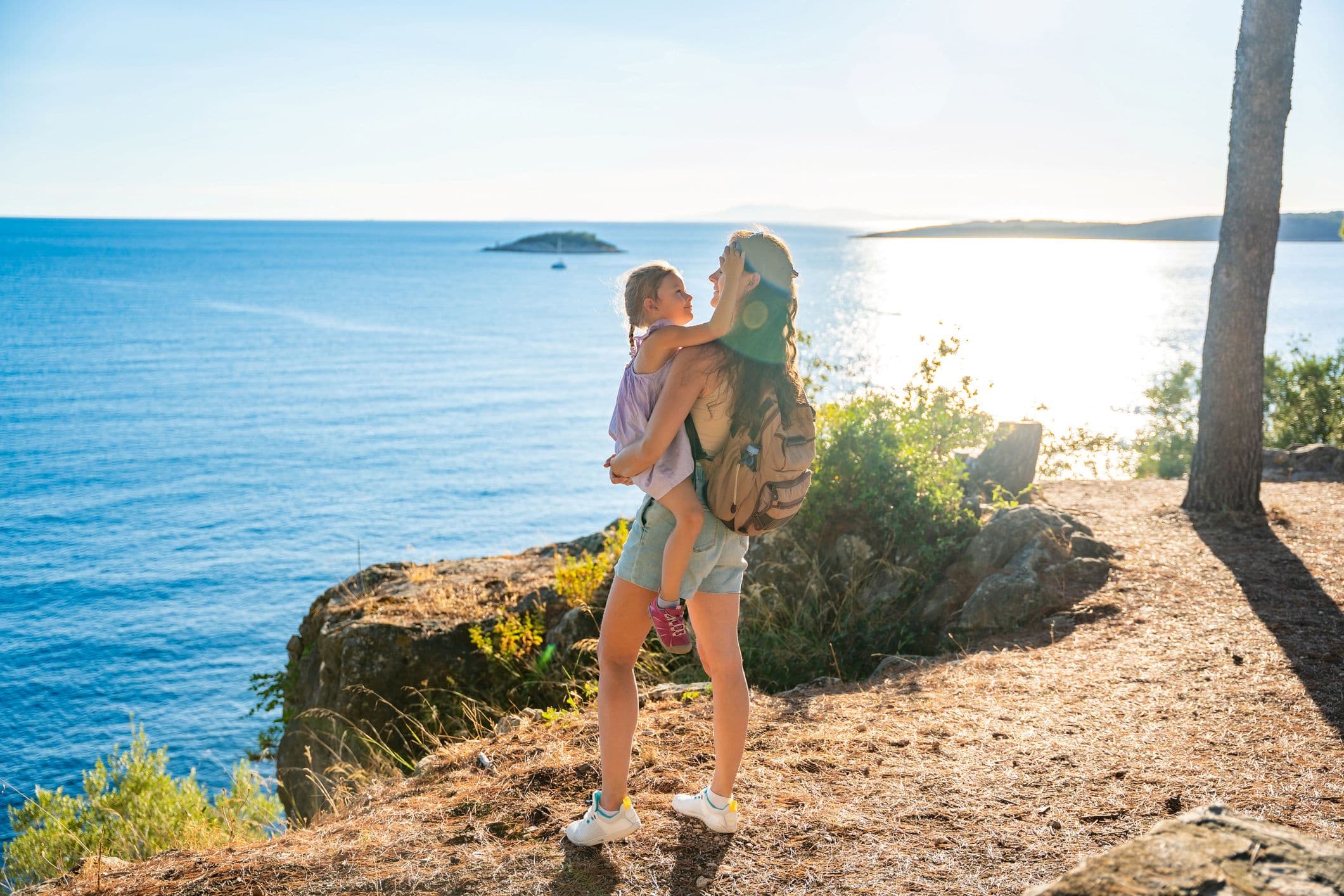
Croatia is home to 2.5 million hectares of forest, 10 UNESCO world heritage sites, a sky-blue coastline and tall craggy mountains. It’s nothing short of a dream for hikers. If you’re the adventurous type, you can take a ferry to any of these 5 national parks to experience the lush beauty of Croatia’s wilderness firsthand.
Visit the Lastovo Archipelago, Mljet, Kornati, Telašćica, and Brijuni this spring or summer; national parks and nature parks located on Croatian islands.
- Lastovo Archipelago: Croatia’s second-youngest nature park
- Mljet: The first marine national park in the Adriatic
- Kornati: The stone pearl of the Adriatic
- Telašćica: The largest and safest natural harbor in the Adriatic
- Brijuni: One of Croatia’s most visited national parks
1. Lastovo Archipelago: Croatia’s second-youngest nature park
The Lastovo region is an archipelago with more than 40 islands, islets, and reefs, and total area that spans 195.8 km². The largest and main island is Lastovo itself, the southernmost inhabited Croatian island. The island was actually isolated for a long period due to a military presence, and it was only opened to tourists in the late 1980s. Today, this island is still relatively undiscovered and is a great option for a peaceful summer holiday.
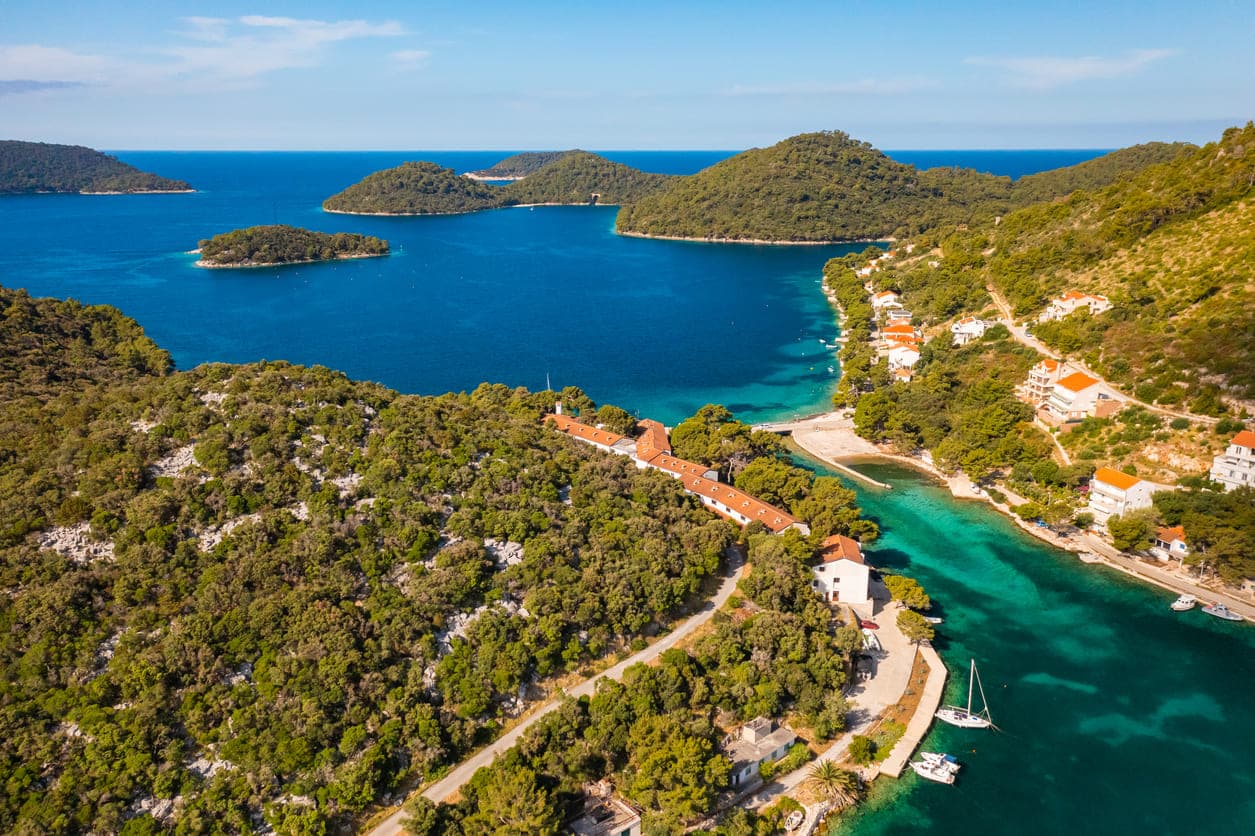
Lastovo Archipelago Nature Park includes more than 40 islands, islets, and reefs. Source: iStock
Within the Nature Park there are more than 200 km of marked trails, so you’ll be able to explore the Lastovo Archipelago on foot or by bike. In addition, you can climb to the highest point of Lastovo, Hum peak (417 m), which offers a panoramic view of the archipelago. This Nature Park is also an excellent destination for divers. In some places around the island, the sea depth reaches over 1,350 m, and the underwater world hides sea caves, shipwrecks, and coral reefs.
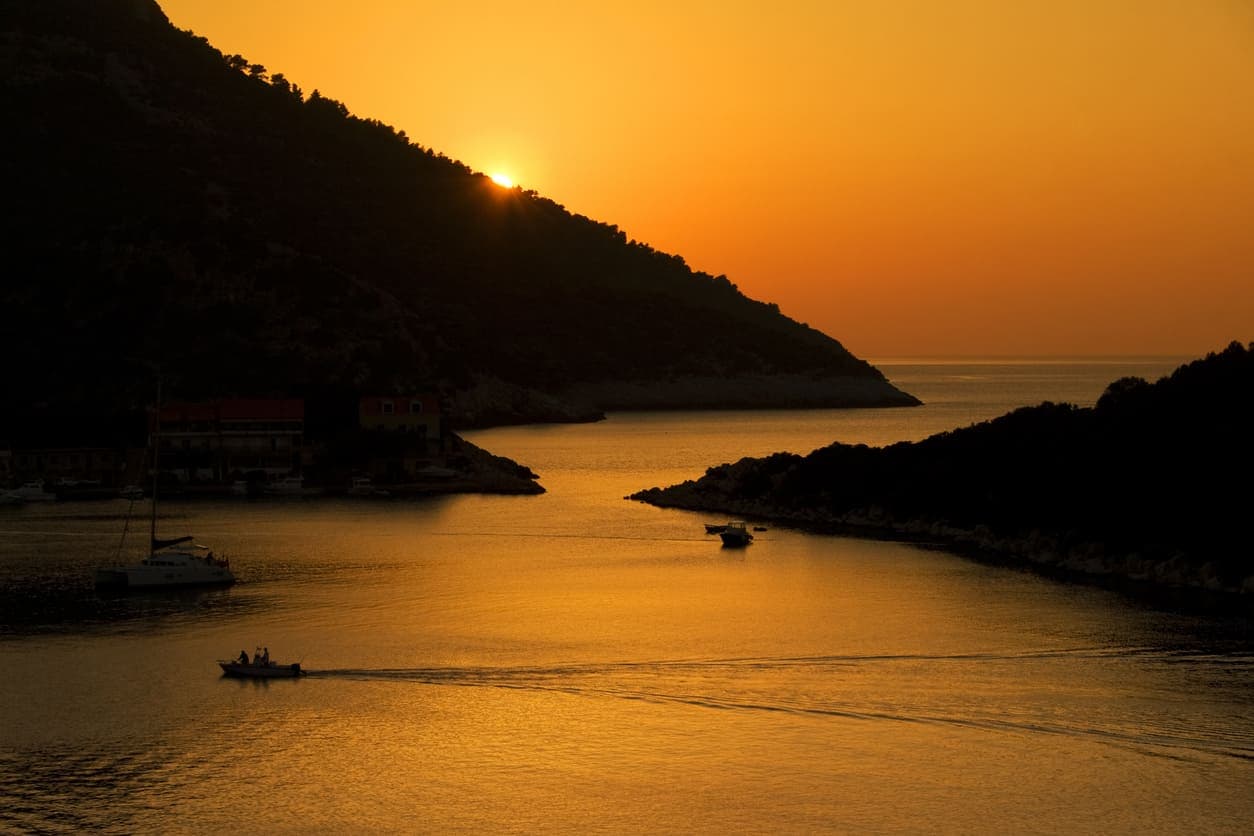
Enjoy a beautiful sunset on the island of Lastovo. Source: iStock
The Lastovo Archipelago is home to over 800 plant species, including oak trees, pine trees, strawberry shrubs and every aromatic you could dream of. The island of Sušac, one of Lastovo Archipelago Nature Park’s many gems, is replete with dramatic cliffs and inviting coves. This island is known for the lighthouse of the same name, and alongside it, the Glavat and Struga lighthouses have been guarding the entrances to the archipelago since the 1800s.
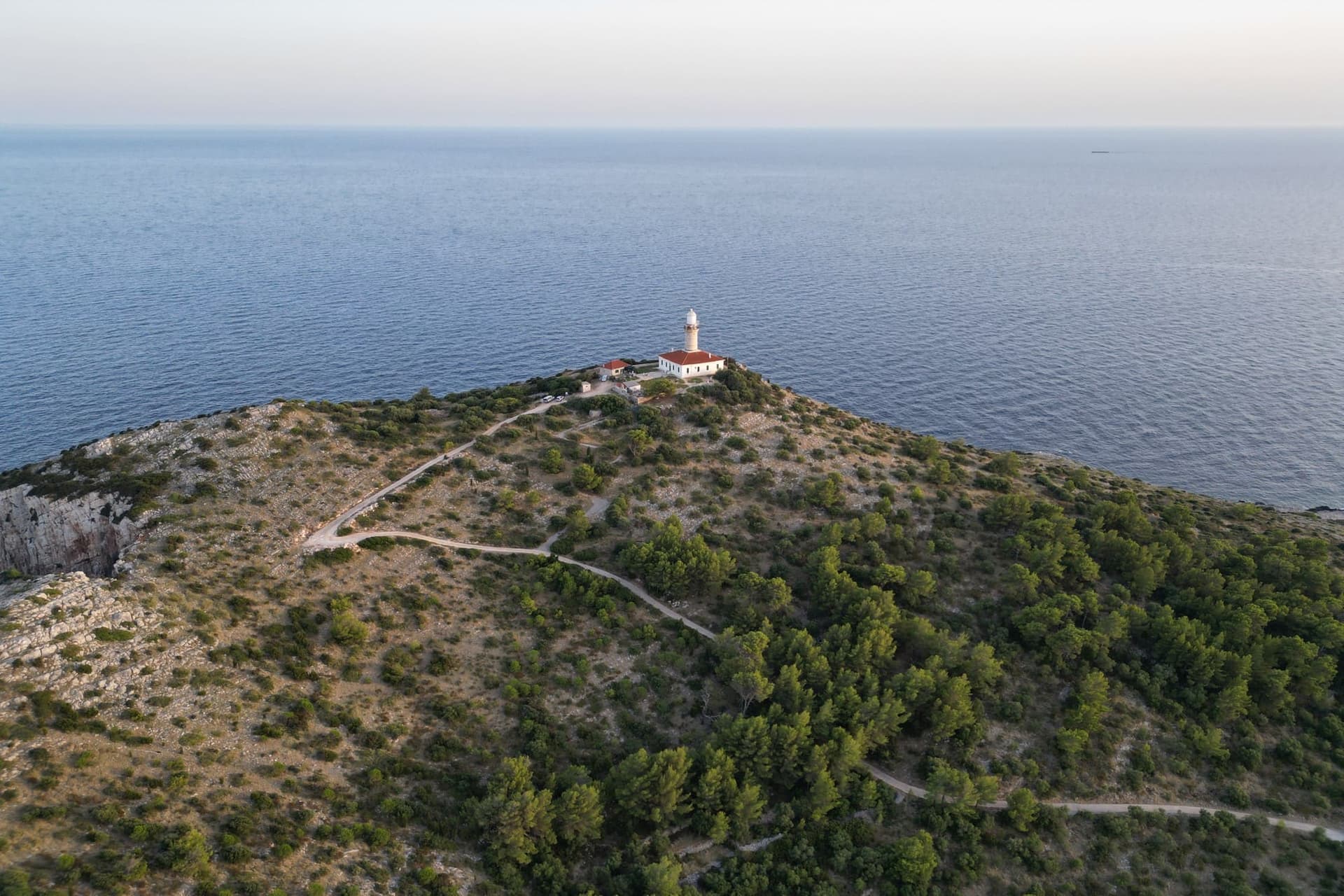
Struga Lighthouse in Lastovo Archipelago Nature Park has been lighting the way for sailors since 1839. Source: iStock
Catamaran to Lastovo
Although it is possible to sail from Dubrovnik to Lastovo, the routes are somewhat less frequent, so you’ll need to plan a few overnight stays on the island. TP Line catamarans to Lastovo travel every day at 2:00 PM. The next catamaran back to Dubrovnik is at 6:00 AM the following day.
The trip itself takes just under 4 hours, so it’s better to plan a holiday of a few days to have enough time to explore the Nature Park. A one-way ticket costs €14.25, but if you’re planning a holiday with children, you can save even more with a discount for the youngest.
2. Mljet: The first marine national park in the Adriatic
Unlike Lastovo Archipelago Nature Park, Mljet National Park has been established and protected for decades. It’s considered the first marine national park in the Adriatic, and some sources even state that Mljet is the oldest marine park in the Mediterranean protected as a national park. It was established on November 11, 1960, and covers roughly one third of the island of Mljet and an area about 500 m from the coast.
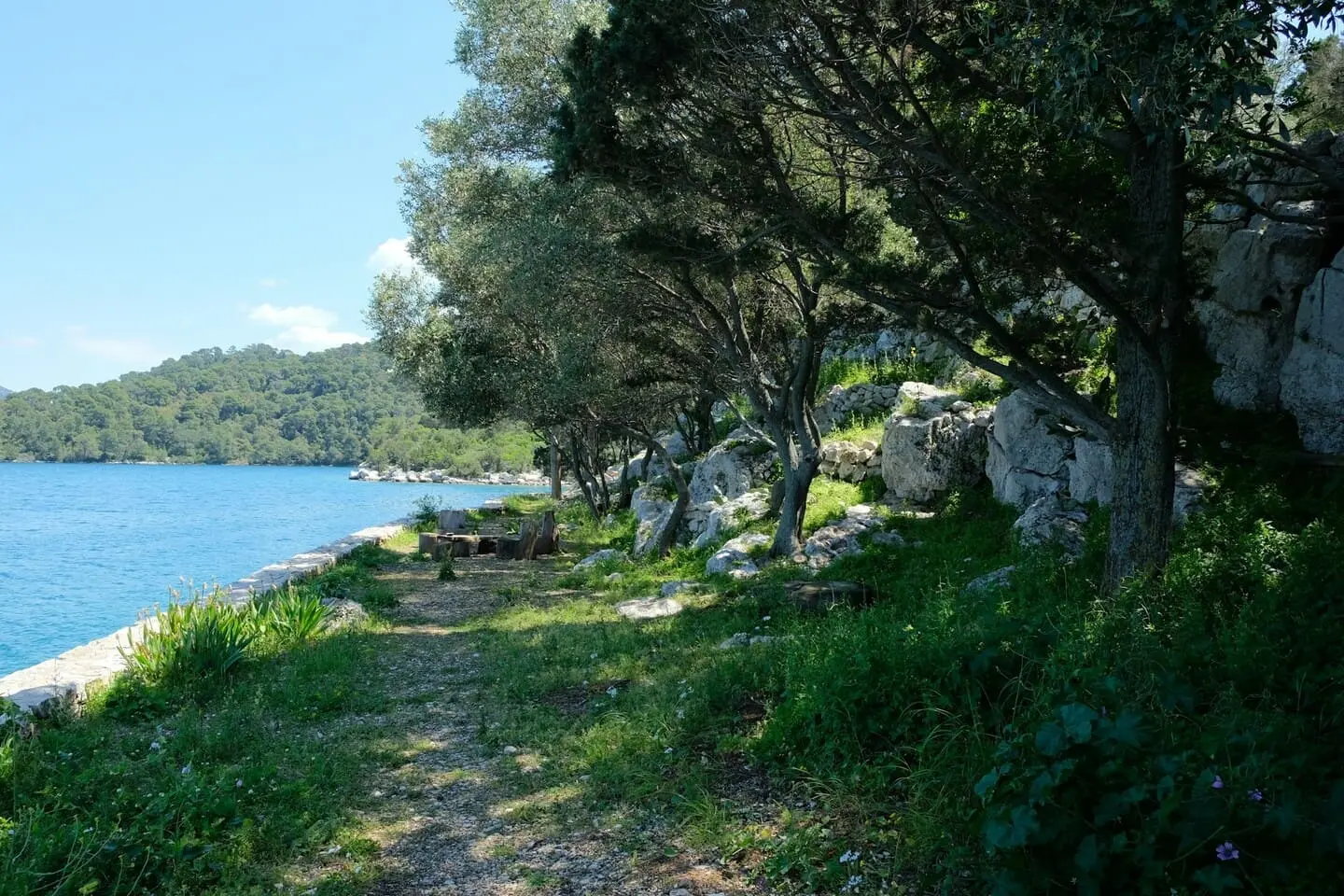
Mljet is one of the greenest islands in all of Croatia. Source: Unsplash
Mljet is also called the green island because 90% of the island’s area is covered by forests of Aleppo pine and holm oak. This National Park is probably best known for its two saltwater lakes: Veliko Jezero and Malo Jezero. Since the water in the lakes is warmer than in the open sea, the lakes are ideal for swimming. While Malo Jezero is special for its dense population of the noble pen shell (Pinna nobilis), Veliko Jezero is interesting because of the islet of St. Mary with a Benedictine monastery and a 12th-century church.
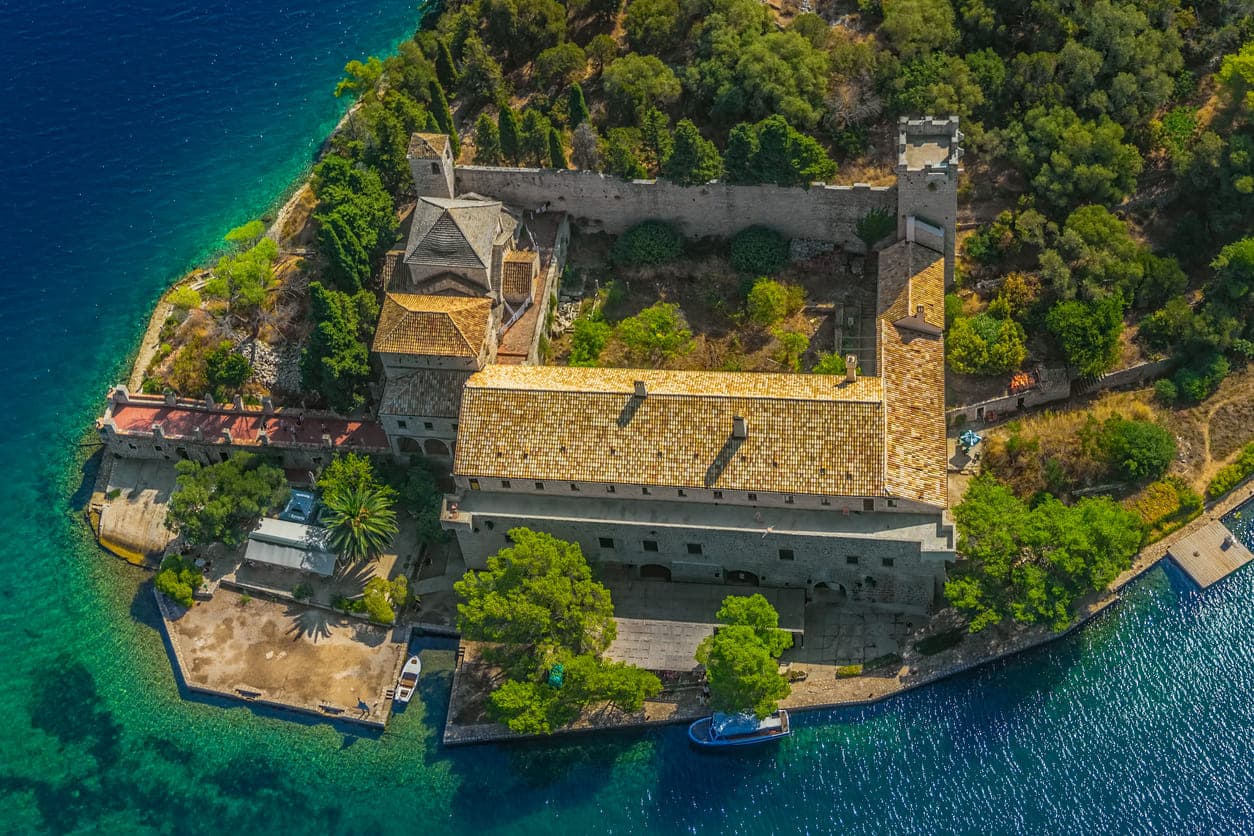
In Mljet National Park, in the Great Lake, there is the small island of St. Mary with a Benedictine monastery. Source: iStock
Catamaran to Mljet
Mljet National Park is a popular destination for day trips by catamaran from Dubrovnik or Korčula.
During the summer months, the TP Line catamaran from Dubrovnik runs in the morning to the ports of Polače and Sobra. Tickets start from €8.70, and discounts are available for young children. The last catamaran from Mljet back to Dubrovnik departs at 5:35 PM, which means you’ll have enough time to explore the National Park.
You can organize your day trip to Mljet if you’re spending your summer holiday on the island of Korčula. The route between Korčula and Mljet is operated by Kapetan Luka – Krilo, and the trip takes about 35 minutes. One-way tickets are a bit more expensive, costing around €20, but it’s possible to save on children’s tickets.
3. Kornati: The stone jewel of the Adriatic
Kornati National Park was established in 1980 and consists of 89 islands, islets, and reefs. While the land part of the islands and archipelago is privately owned, the marine part is protected through the park. This National Park is a “nautical paradise” thanks to the many islands and bays ideal for sailing and boating. In addition, the sea around Kornati is very clean and clear, making it excellent for exploring more than 353 species of algae and around 850 animal species.
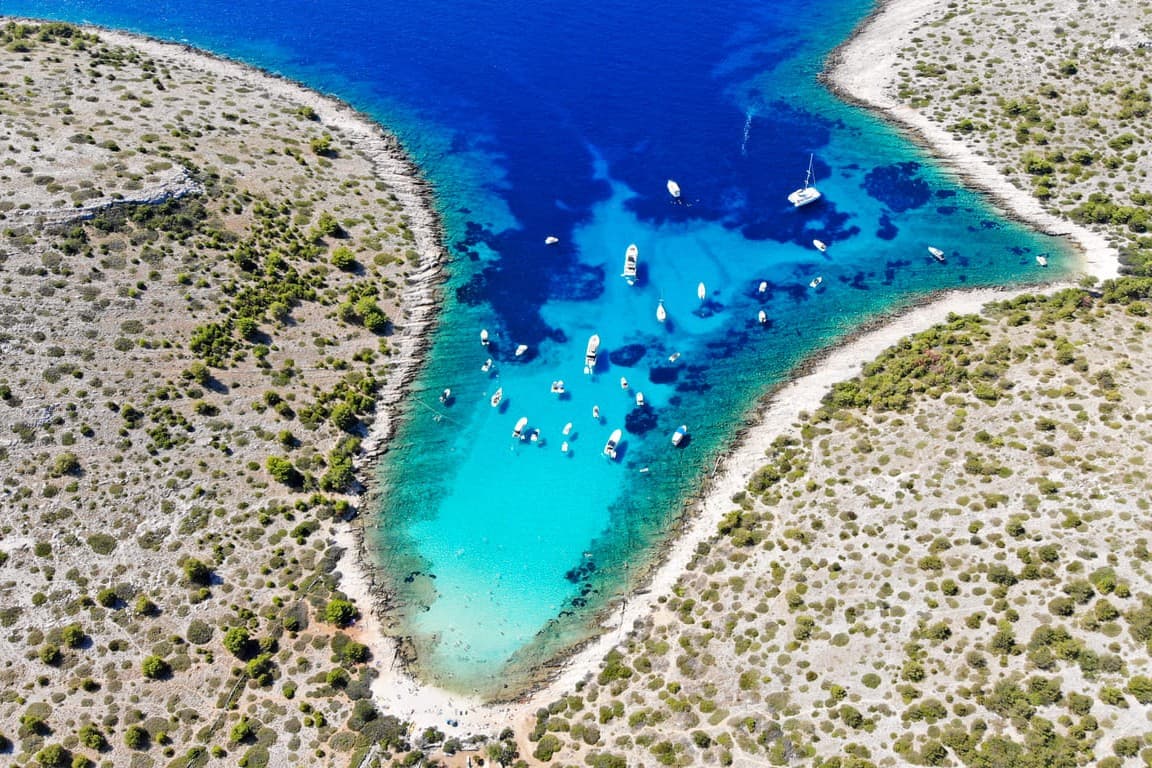
Kornati National Park is a true paradise for boaters. Source: iStock
According to the 2021 census, the settlement of Kornati had only 14 residents. Due to the specific soil, agriculture never developed on Kornati, and throughout history the inhabitants mostly raised sheep. The islands also feature cultural and historical remains such as the Tureta fortress, small churches, and traces of historical settlements.
4. Telašćica: The largest and safest natural harbor on the Adriatic
Telašćica Nature Park is located in the southeastern part of Dugi Otok. The park includes 25 smaller coves, 13 islands and islets, and numerous reefs. Telašćica Bay cuts deep into the mainland and is about 8 km long. It’s sheltered from most winds, making it the largest and safest natural harbor on the Adriatic.
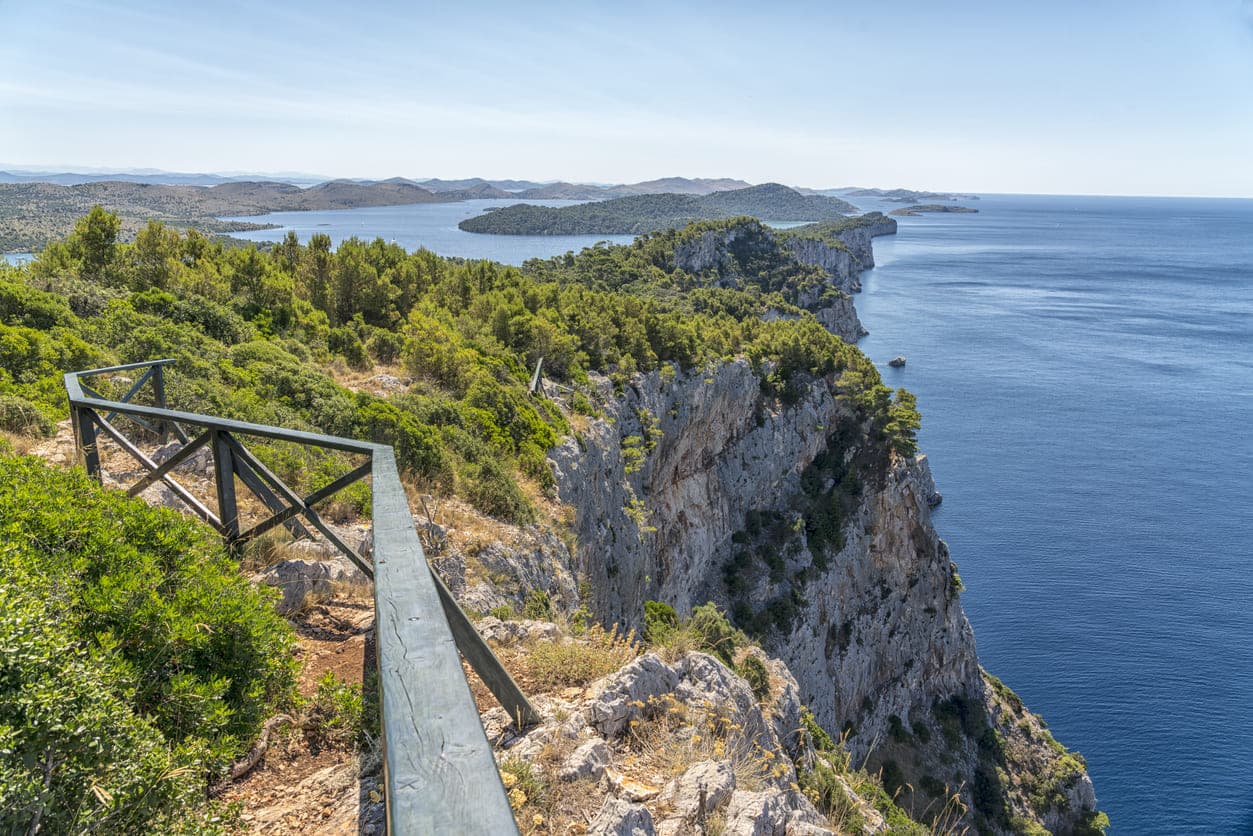
Telašćica Nature Park is known for its steep sea cliffs. Source: iStock
Besides its safe bay, this Nature Park is known for its steep sea cliffs and the saltwater Lake Mir. The cliffs on the outer side of Dugi Otok rise up to 161 m above sea level, and the underwater part of the cliffs reaches depths of up to 90 m. Swimming is even allowed in the lake itself, and the temperature is higher than in the open sea.
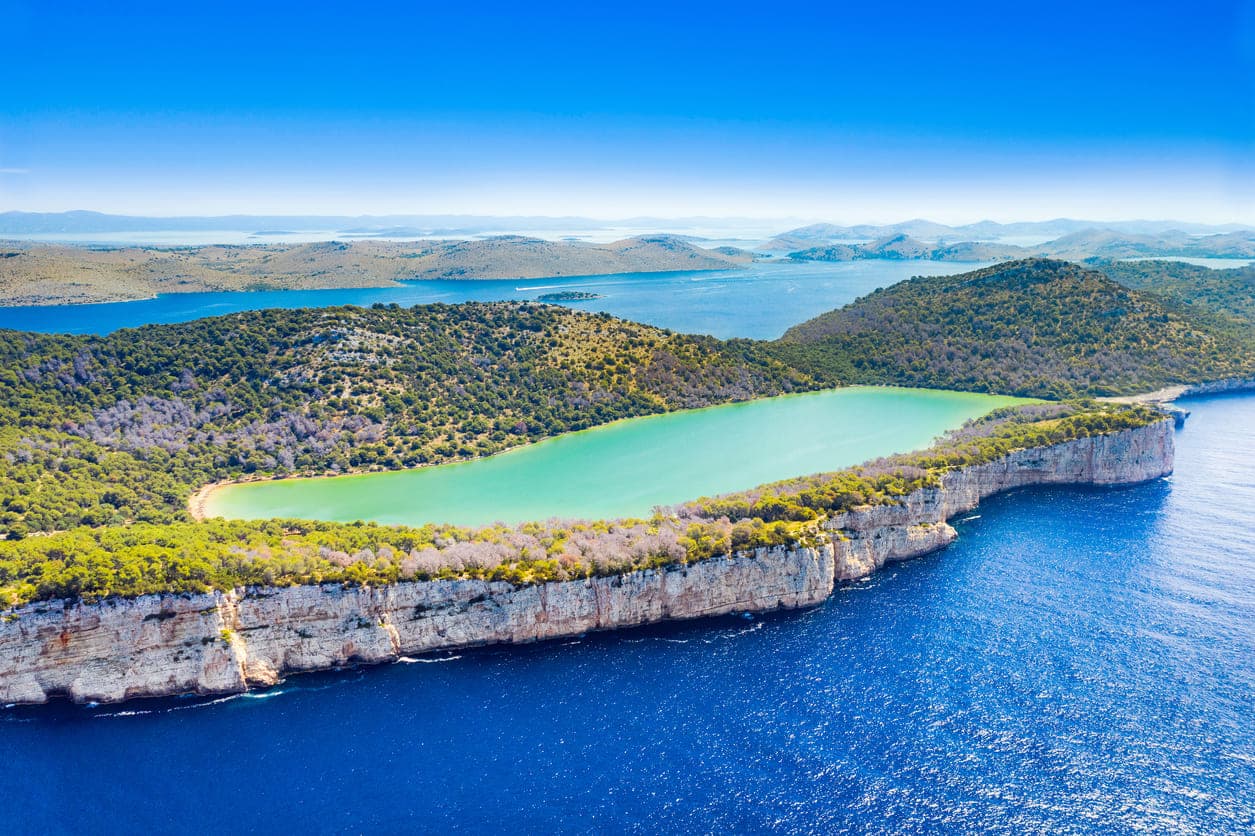
Swim in the saltwater Lake Mir in Telašćica Nature Park. Source: iStock
Unlike swimming, diving is regulated and permitted under special conditions. You can also explore Telašćica Nature Park on foot. The park has maintained walking trails and viewpoints above the cliffs that offer views of the open sea and the Kornati archipelago.
5. Brijuni: One of the most visited Croatian national parks
Brijuni National Park has existed since 1983 and consists of 14 islands and islets, the largest of which are Veliki Brijun and Mali Brijun. Veliki Brijun is the only permanently inhabited island within Croatia’s national parks. Brijuni were the residence of Josip Broz Tito and an important political center of the former Yugoslavia. Some of the animals in the safari park were gifts from various politicians to Josip Broz Tito. That’s why on Brijuni you can see exotic animals such as zebras, antelopes, elephants, and llamas.
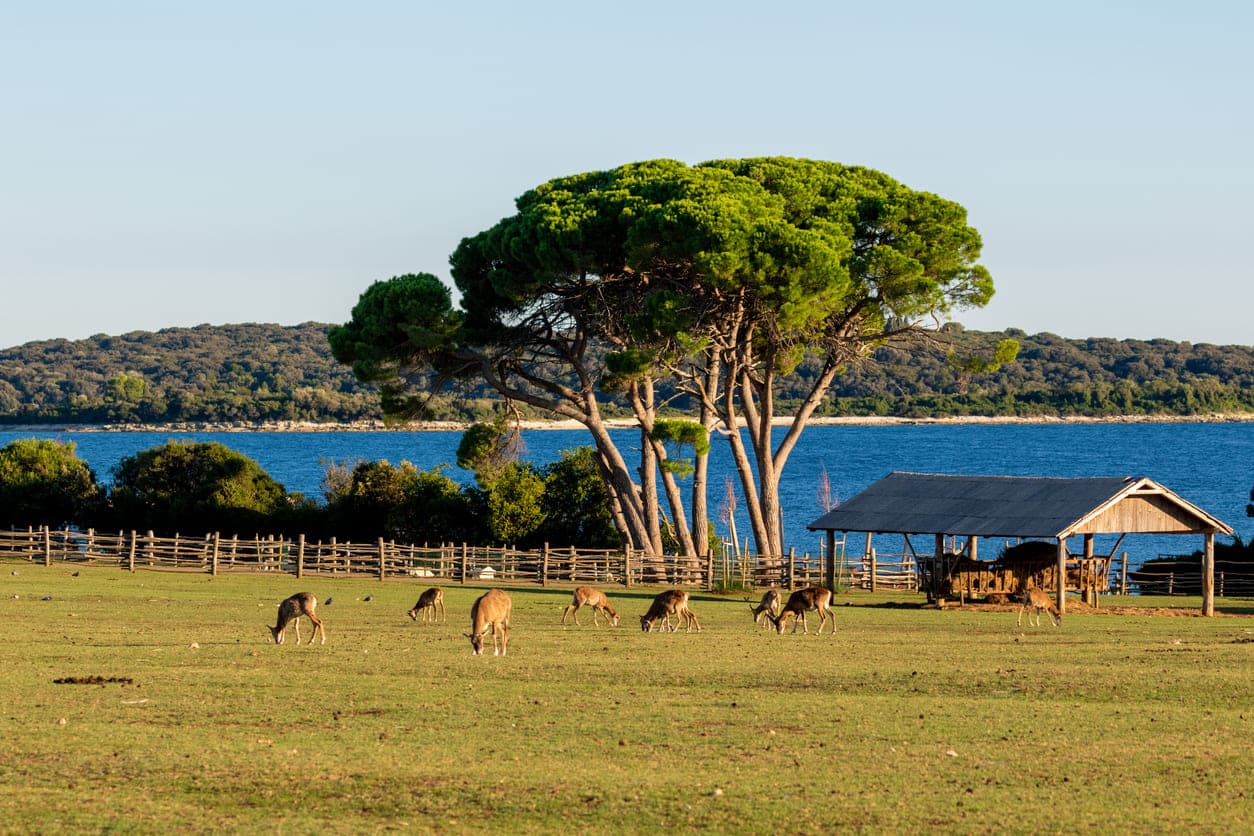
In Brijuni National Park on Veliki Brijun, you can see many exotic animals. Source: iStock
Veliki Brijun is an excellent idea for a day trip if you’re spending your summer holiday in Istria, because the ferry regularly sails from Fažana. Tickets are easy to book online on the official website. The whole island is crisscrossed with trails, and it’s also possible to rent a bicycle or hop on the tourist train to explore the island. In addition, swimming is allowed on the island, and there are maintained beaches with restaurants and other amenities.
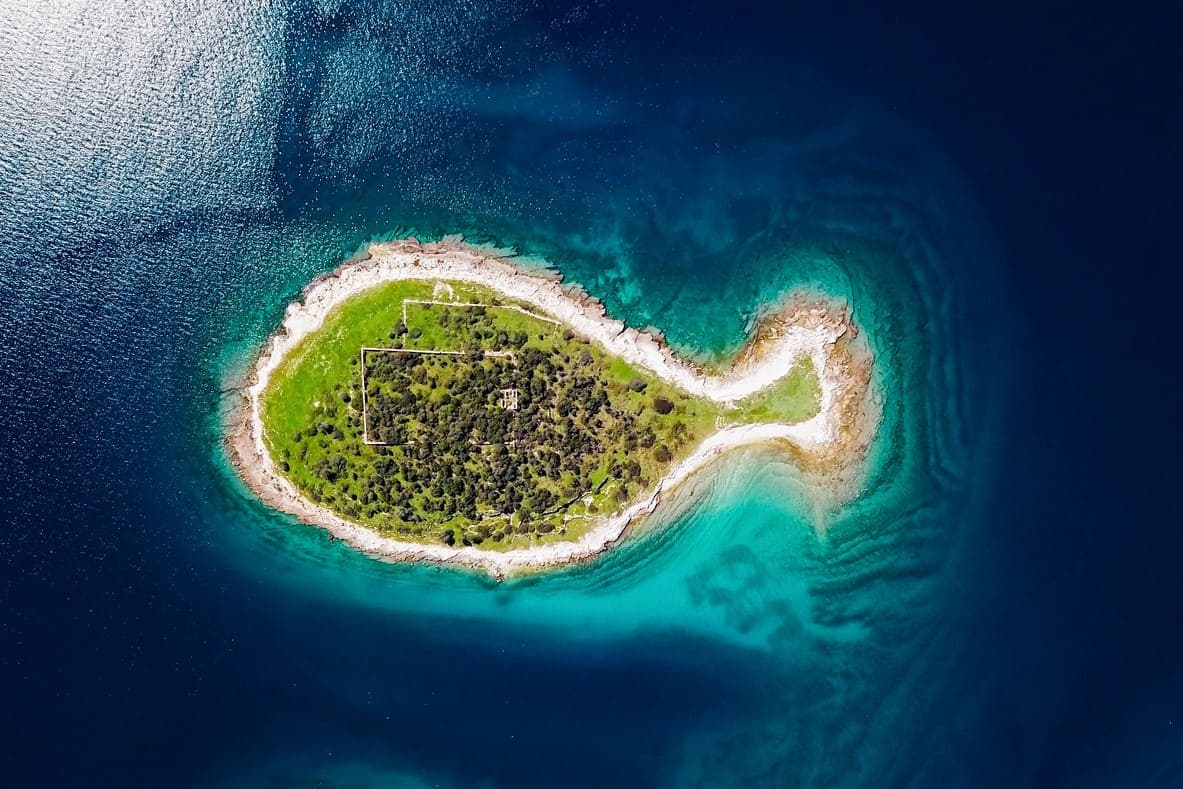
Otok Gaž, shaped like a fish, belongs to Brijuni National Park. Source: iStock
Travel to national parks and nature parks on Croatian islands
Whether you’re spending your summer holiday in the northern, central, or southern part of the Adriatic, you can plan a visit to national parks and nature parks on Croatian islands. If you’re near Dubrovnik this summer, book a catamaran to Lastovo or Mljet. If you’re spending your holiday around Zadar, you can visit Kornati and Telašćica, and your holiday in Istria will be rounded off by a day trip to Brijuni.
Find your catamaran tickets to Lastovo and Mljet on our website, or download the Ferryscanner app!
More Articles
View all Inspiration articles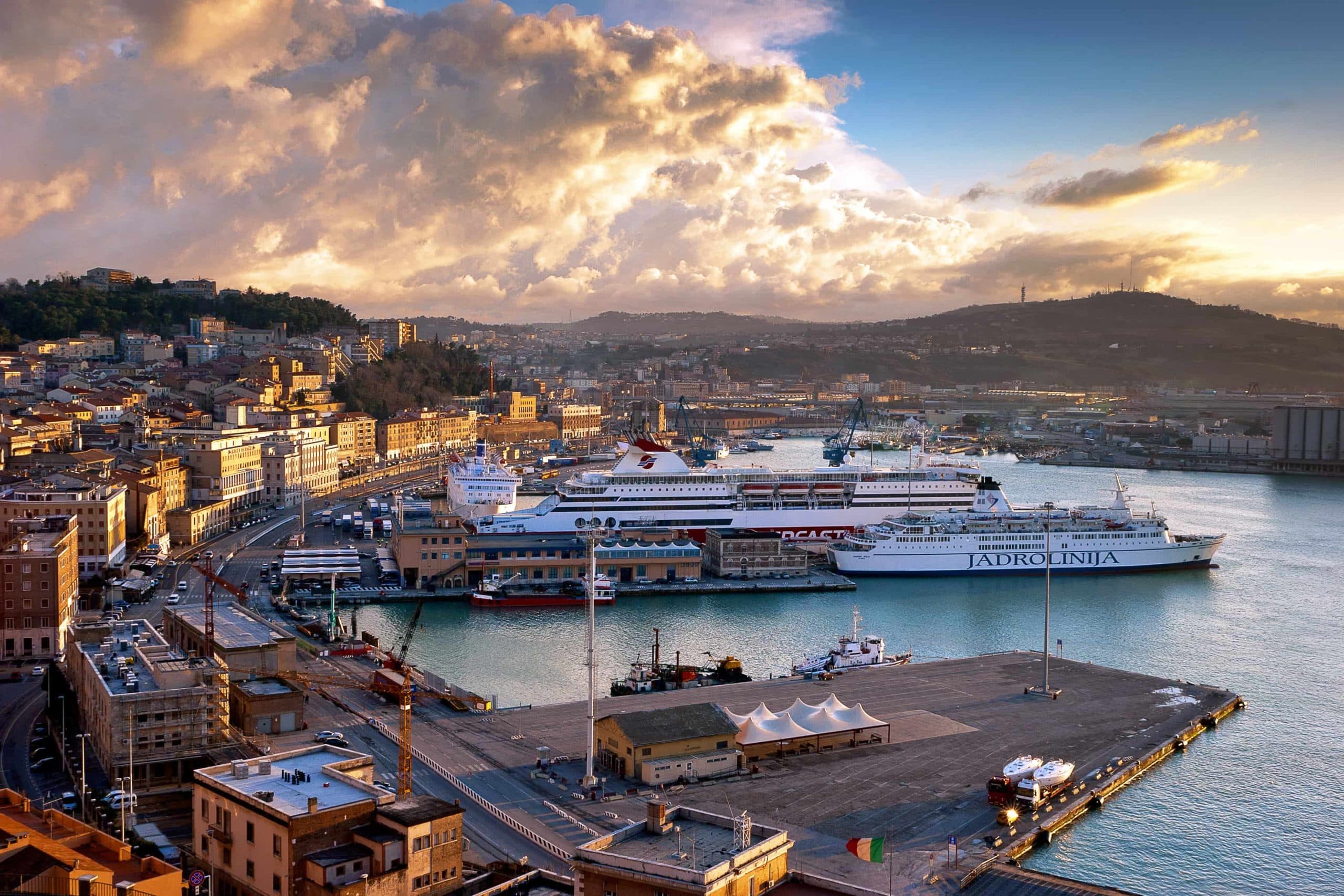
Ferries from Croatia to Italy: Routes, Prices & Travel Tips
26 February 2025
Sail from Croatia to Italy with ease! Discover ferry routes from Split, Pula, Rovinj, and Dubrovnik to Italy’s top destinations like Venice and Ancona. Compare schedules, prices, and travel tips to plan your Adriatic crossing.
7 UNESCO World Heritage Sites worth boarding a ferry for
7 September 2026
Some places you should really arrive at by boat. Check out these 7 UNESCO World Heritage Sites, from the Giant's Causeway to the Amalfi Coast, that you can reach by ferry.