
Welcome to Vietnam! From the country’s capital Hanoi to the stunning turquoise shores of Phu Quoc, this nation boasts more than 3,000 kilometres of coastline, including its peninsula and islands. Owing to the mountainous and rugged nature of its inland routes, ferries are a common means of transport for reaching various destinations across the country – and not only the islands!
This practical guide to ferries in Vietnam includes the most popular sea routes, ticket prices and a few handy ferry travel tips. Everything you need to book the perfect route on Vietnamese waters.
Article overview:
- Ferries: more convenient than planes and buses
- Easy access to islands and touristic shores
- Vietnam top ferry routes
- Practical tips to visit Vietnam by ferry
- Safety and arrival time
- Book your ferry tickets now
Ferries: a common means of transport in Vietnam

Ha Long Bay is one of Vietnam’s treasures and is best discovered by sea. Source: iStock.
A country shaped by the sea
Made up of a large peninsula and around 4,000 islands, Vietnam lives in harmony with its maritime heritage. It borders the Gulf of Beibu to the north, the South China Sea to the east and the Gulf of Thailand to the south. In short, Vietnam curves gracefully along its coastline.
Easy access to the most beautiful coasts and islands
For this reason, both tourists and locals frequently take the ferry. It is often the simplest way to travel from point A to point B. If you wish to venture off the beaten track, discover islands without airports or see towering rock formations rising from the sea with your own eyes…the choice is obvious: the ferry, of course!
Traveling by ferry is often more practical than flying or taking the bus
Vietnam’s coastal and island geography, along with the limited number of airports serving them, can make flying less convenient than it may seem. While major cities are well connected by domestic flights, many island destinations have small regional airports with few connections – or no airport at all. Airfares are often higher and, even when landing nearby, you will usually need an additional transfer by road and sea to reach your final destination.
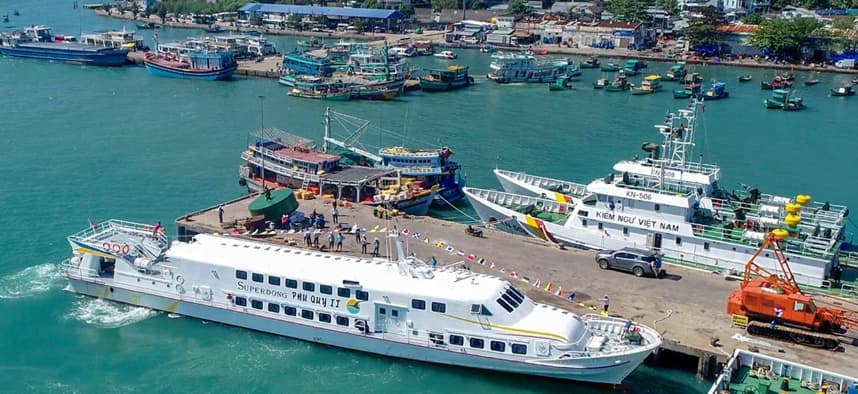
Superdong is one of the country’s leading ferry operators, with a large fleet of high-speed vessels serving the islands. Source: Superdong.
Buses and trains are reliable for traveling on the mainland, but they do not reach the islands. What may initially seem like a budget-friendly journey can quickly turn into a long trip, including a transfer to a port and the purchase of a separate ferry ticket. Ferry tickets are generally affordable, timetables are clear and regular, and you avoid the hassle of airports and boarding procedures.
Most popular ferry routes in Vietnam
If you have already done a bit of research, you probably know where you want to go! When visiting Vietnam, there are a few must-see destinations that are easily reached by ferry.
- Rach Gia – Phu Quoc (~€13)
- Tran De – Con Dao (~€15)
- Phu Quoc – Ha Tien (~€8)
- Ho May Park – Ho Chi Minh City (~€13)
Types of ferries in Vietnam
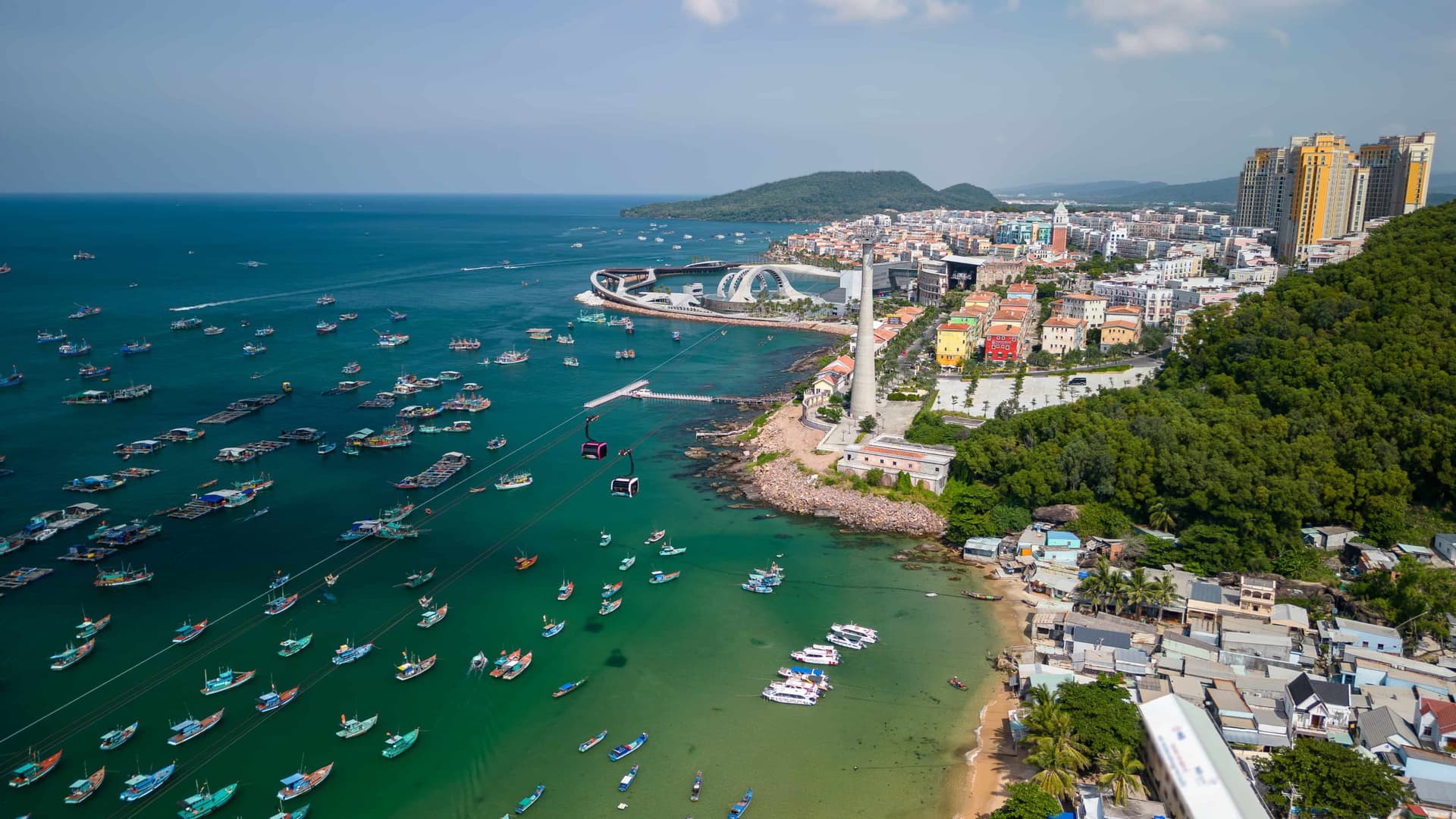
Phu Quoc Port seen from a cable car offering panoramic views over the bay and harbour. Source: iStock.
What types of vessels operate in Vietnam?
On the busiest maritime routes, you will often find sturdy high-speed vessels that do not carry vehicles. Commonly referred to as “catamarans”, these ships shuttle between coastal cities or connect the mainland to islands. They can carry around 300 passengers and operate several crossings per day.
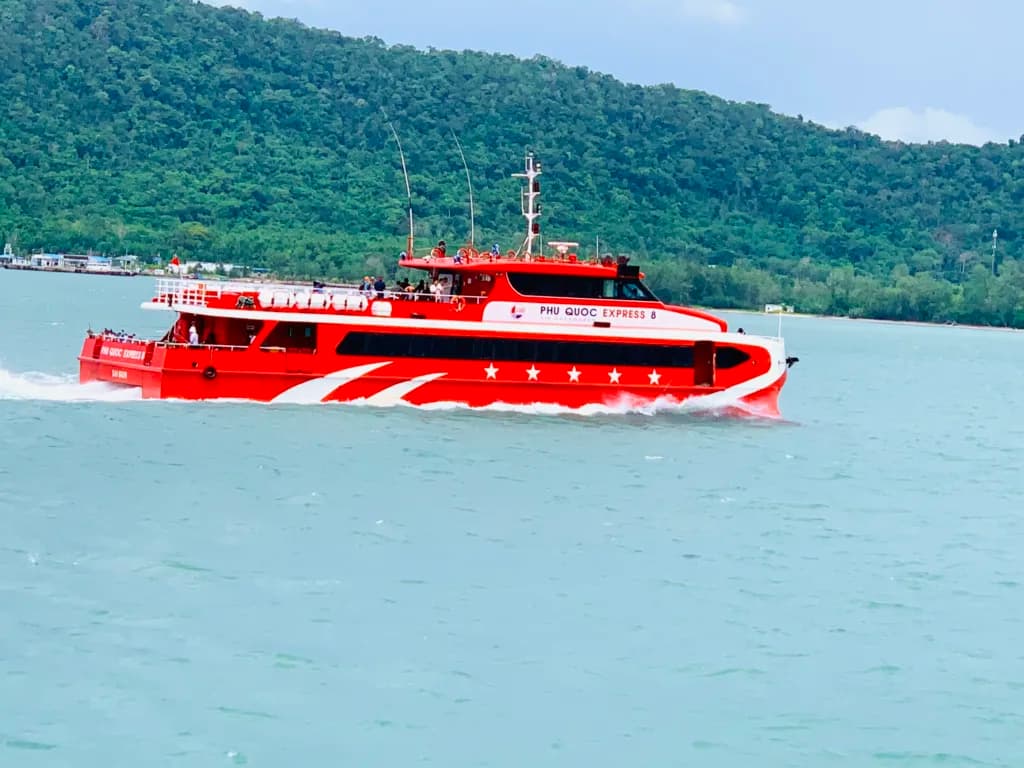
The Phu Quoc Express 6 runs daily, all year round, between the mainland and the popular island of Phu Quoc. Source: Phu Quoc Express.
However, even if there is space on board, we recommend booking in advance to secure the departure time that suits you best. On Ferryscanner, you can compare prices and departure times in real time and keep all your tickets in one single app!
Ferry vs speedboat: what’s the difference?
Ferries are larger and more stable vessels, offering more room to move around, better protection from Vietnam’s intense sun and more space for luggage. They are slower, but generally cheaper and more comfortable when the sea is rough.
Speedboats are smaller and faster, reducing travel time on short routes, but the crossing can be bumpy and space on board is more limited. They also tend to be slightly more expensive.
If you are looking for a pleasant and economical journey, opt for the ferry. If you are short on time or travelling between nearby islands, a speedboat may be a good option – though it is clearly less comfortable.
Practical tips for traveling by ferry in Vietnam
Although there are major ports in the north of the country, the ferry routes most frequently used by tourists are located in the south of the peninsula. The Mekong Delta region is the key departure point for well-known islands such as Phu Quoc and Con Dao.
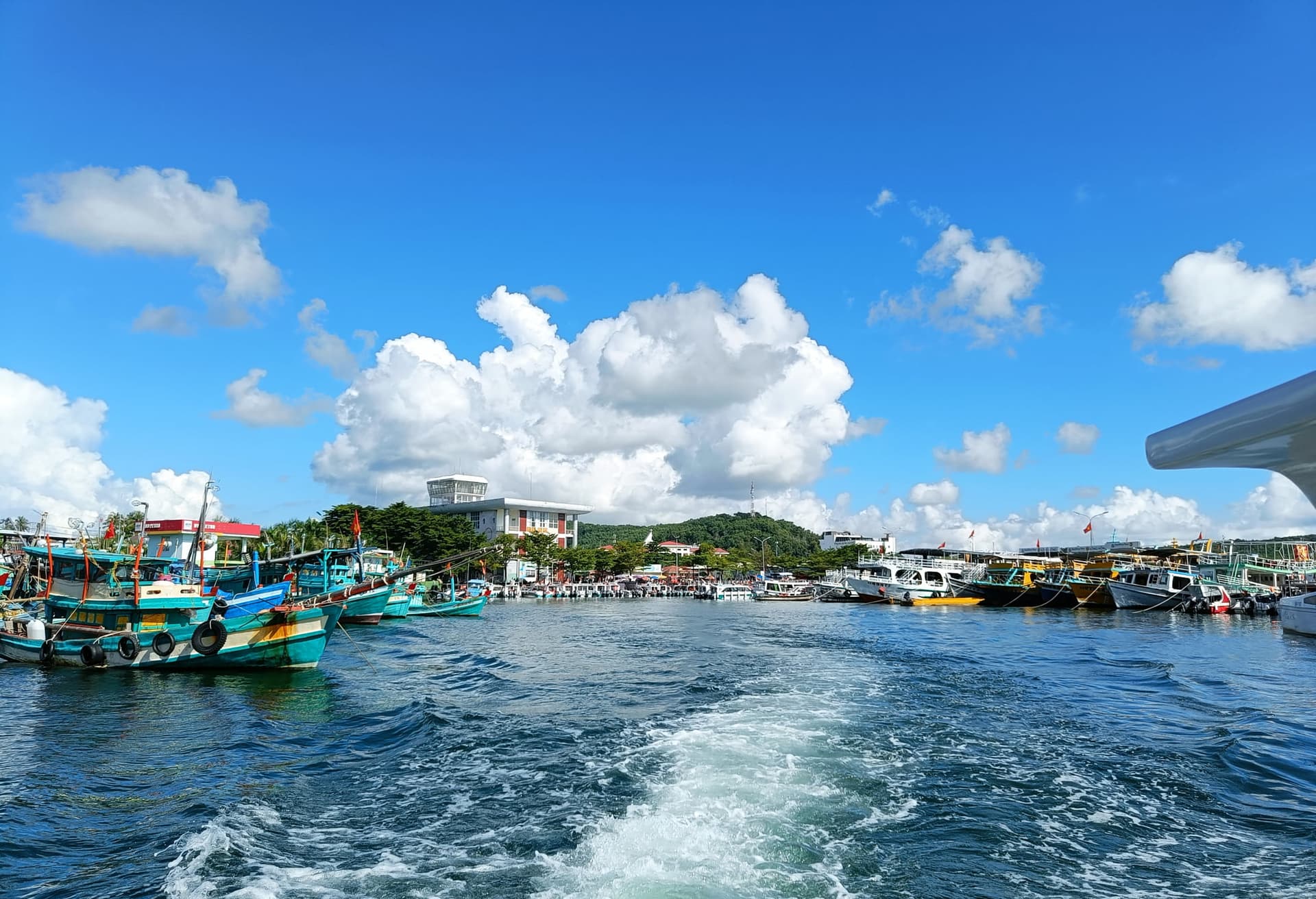
Phu Quoc ferry terminal is an important maritime and tourist hub. From here, buses, trains and excursions depart to explore the island. Source: iStock.
Getting to ports in Vietnam
Ferry ports are generally located close to major cities. You can usually reach them by car, bus, shuttle service or taxi. Vietnam also has a well-developed railway network.
It is worth noting that in wetland areas where the coastline blends into the land, boats also operate along rivers and canals, offering an excellent alternative mode of transport. The Ho Chi Minh City – Ho May Park route is a great example of faster public transport by water.
Comfort, onboard services and journey times
On board ferries, you will find everything you need for a pleasant and comfortable crossing. Although most ferries do not offer cabins, you will not need them, as journeys typically last around 1 hour 45 minutes and rarely exceed three hours. Comfortable seating, outdoor decks for enjoying the views and toilet facilities are usually available.
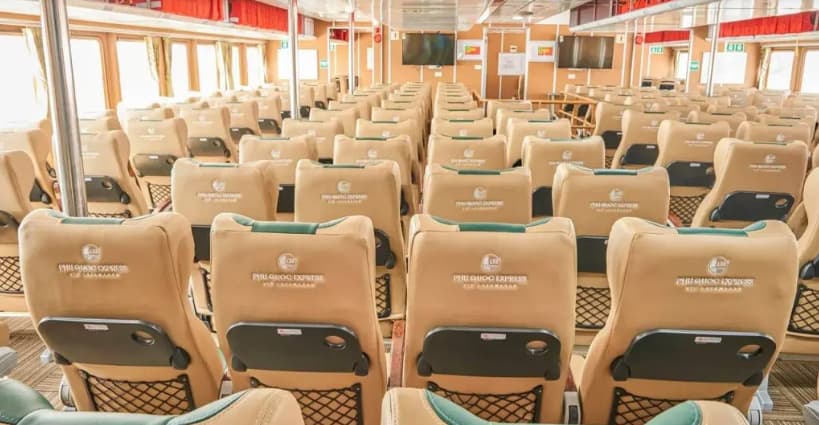
What should you bring on board?
Travel light and keep things simple. A small backpack is sufficient for most crossings: sunscreen, a hat and a light layer are very useful for protection against the sun and wind. Bring water and a snack, even for short trips; onboard catering varies depending on the operator and may run out during busy morning departures.
Keep your phone, wallet and documents in a waterproof pouch, as sea spray is common on vessels with open decks. If you are travelling with larger luggage, make sure it is clearly labelled so you can easily identify it when disembarking.
Onboard safety and arrival time
Ferries in Vietnam are just as safe as elsewhere. Simply follow basic safety rules: remain in designated seating areas, do not lean over railings and avoid standing at the bow unless authorised by the crew. All vessels must be equipped with life jackets, usually stored above your seat or underneath it; take note of their location, even though you will probably never need them.
Arrive at the port at least 30 minutes before departure – even earlier during high season or for popular routes such as Rach Gia – Phu Quoc. Boats will not wait for late arrivals. Allowing sufficient time for check-in, luggage labelling and settling into your seat will make your journey far more enjoyable.
Book your ferry tickets to explore Vietnam with Ferryscanner
The Ferryscanner search engine is the easiest way to find and book ferry tickets to explore Vietnam in just a few seconds. The busiest routes should be booked in advance, just as you would with a flight. Crossings such as Rach Gia – Phu Quoc and Tran De – Con Dao fill up quickly during high season and holidays.
Looking to book several ferries? No problem! Our search bar and app offer multi-destination searches, and you can access all your tickets in the My Trips section.
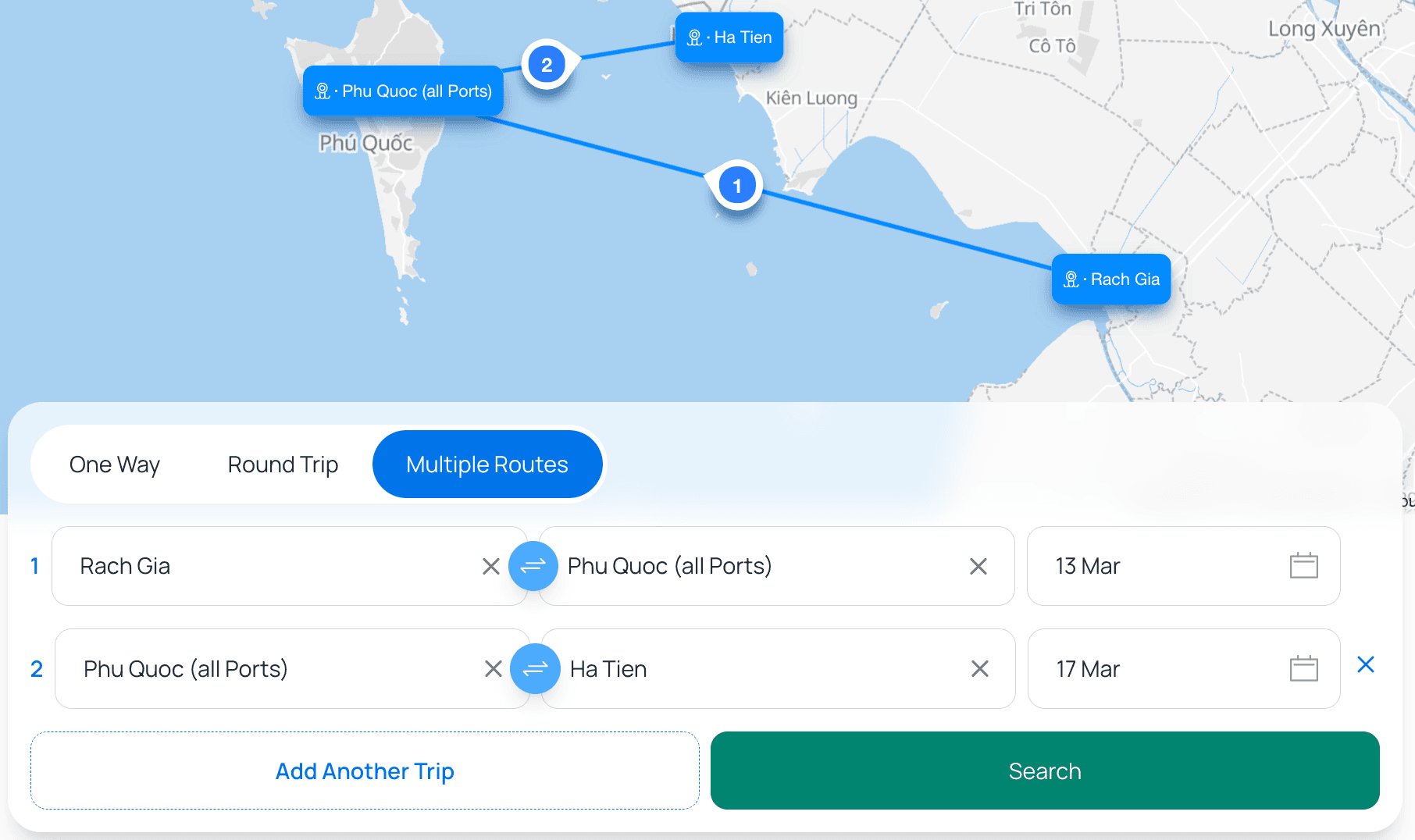
The Multi-Destination option allows you to book several ferries in a single reservation on Ferryscanner. Source: Ferryscanner.
Now there is only one thing left to do! Plan your itinerary, book your tickets and cast off to discover Vietnam.
More Articles
View all Guidance articles
Ferries from Croatia to Italy: Routes, Prices & Travel Tips
26 February 2025
Sail from Croatia to Italy with ease! Discover ferry routes from Split, Pula, Rovinj, and Dubrovnik to Italy’s top destinations like Venice and Ancona. Compare schedules, prices, and travel tips to plan your Adriatic crossing.

7 UNESCO World Heritage Sites worth boarding a ferry for
7 September 2026
Some places you should really arrive at by boat. Check out these 7 UNESCO World Heritage Sites, from the Giant's Causeway to the Amalfi Coast, that you can reach by ferry.