7 UNESCO World Heritage Sites worth boarding a ferry for
7 September 2026 • Brooke MackenzieThe ancient world built its greatest cities by the water, and a surprising number of its most spectacular corners are still best reached the old-fashioned way—by boat. Here, we’ll share some of our top picks for magical historic destinations you can reach by ferry, including destinations on the Amalfi Coast, the Croatian islands, the banks of Greece, and Scotland. Ready to embark, historian?
The Amalfi Coast, Italy
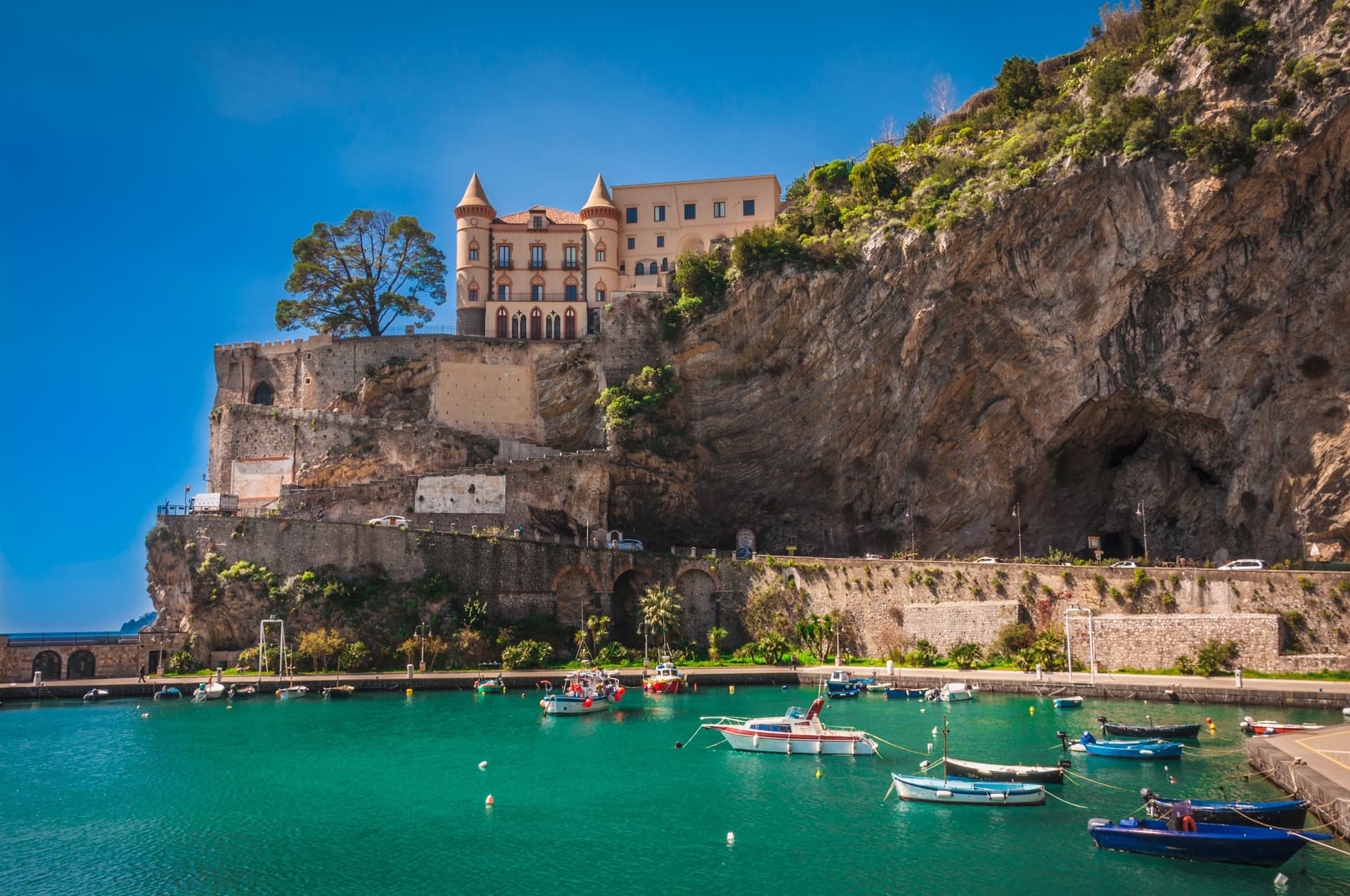
Stunning jade waters on the coastline of Maiori. Source: iStock
The UN defines the Costiera Amalfitana as a landscape of outstanding culture value, and rightly so. Its combination of natural splendor and Paleolithic, Mesolithic, Roman and Medieval historic sites led it to UNESCO inscription in 1997. The coastline includes its namesake Amalfi, as well as Positano, Ravello, Minori and Maiori.
What to see along the Amalfi Coast
Positano’s domed church covers a Roman villa frozen by the same AD 79 eruption that swallowed Pompeii, its frescoes still vivid with colour; a few coves east in Minori, a first-century Roman maritime villa unfurls its mosaics and garden nymphaeum just steps from the water. In Amalfi itself, the striped Duomo di Sant’Andrea and its serene 13th-century Cloister of Paradise crown what was once a mighty seafaring republic, while high above, Ravello guards the Moorish-tinged Villa Rufolo, whose gardens seduced everyone from Boccaccio to Wagner. Add Maiori’s clifftop medieval castle and you’ve got the better part of two millennia—Roman, Byzantine and medieval—scattered a short ferry ride apart.
Between roughly April and October, a dense seasonal network of high-speed ferries and hydrofoils run the Amalfi coast. These are foot-passenger boats—you can’t bring a vehicle—which is actually a blessing, since it lets you entirely skip the Amalfi Coast’s notoriously jammed cliff road.
Popular ferry routes to the Amalfi Coast
⛴️ Salerno → Amalfi — 25–70 min
⛴️ Salerno → Positano — ~75–90 min
⛴️ Sorrento → Positano — 20–60 min
⛴️ Sorrento → Amalfi — ~50–90 min
⛴️ Naples → Positano → Amalfi — ~75 min to Positano, +30 min on to Amalfi
⛴️ Capri → Amalfi — ~50–60 min
🔁 Positano ↔ Amalfi — 15–25 min
🔁 Minori / Maiori / Cetara → Amalfi — 5–20 min
The Medieval City of Rhodes, Greece
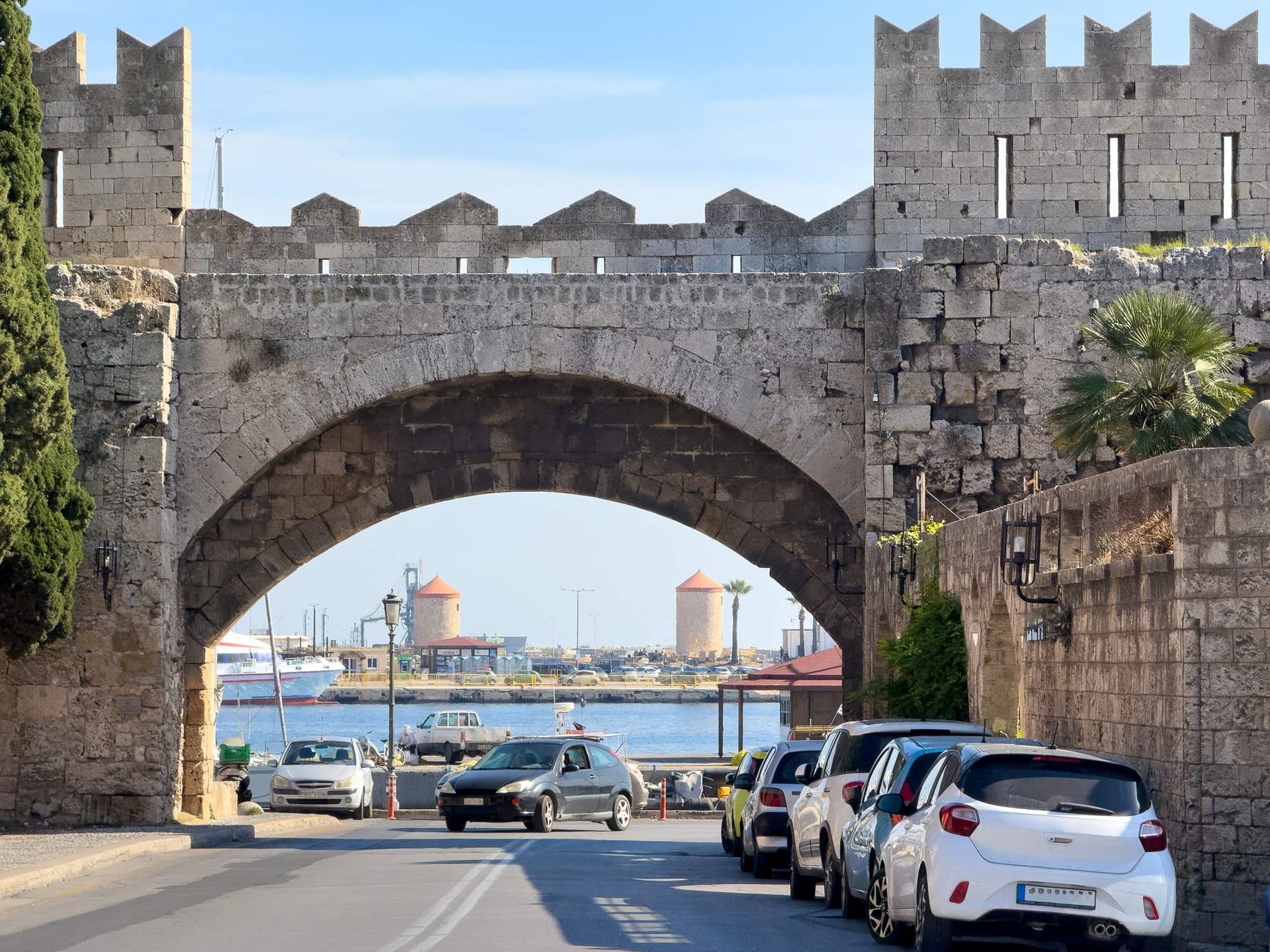
The past and the present collide in stunning Rhodes. Source: iStock
The Medieval City of Rhodes was inscribed by UNESCO in 1988. To this day, it remains as the largest inhabited medieval town in Europe, and a remarkable survival of a fortified Gothic city built by a crusading order.
Stroll the historic streets of Rhodes
When the Knights of St John took Rhodes in the 14th century, they transformed its old town into the mightiest fortress in the eastern Mediterranean. Today, it remains astonishingly intact. Pass through the great gates in the 4 km of walls and walk the cobbled Street of the Knights, lined with the medieval inns of the order’s various nationalities, up to the restored Palace of the Grand Master. The Knights’ 15th-century hospital now holds the Archaeological Museum, while layers of Byzantine, Ottoman and Italian history—mosques, hammams, churches—jostle in the lanes below.
Rhodes is a year-round ferry hub for the Dodecanese, with connections that multiply in summer. Fast catamarans hop down the island chain from Kos in a couple of hours, while overnight ferries make the long haul from Athens.
Popular ferry routes to Rhodes
⛴️ Kos → Rhodes: ~2h–3h
⛴️ Piraeus (Athens) → Rhodes: ~15–18h (overnight)
🔁 Symi → Rhodes: ~1h
Split + Hvar, Croatia
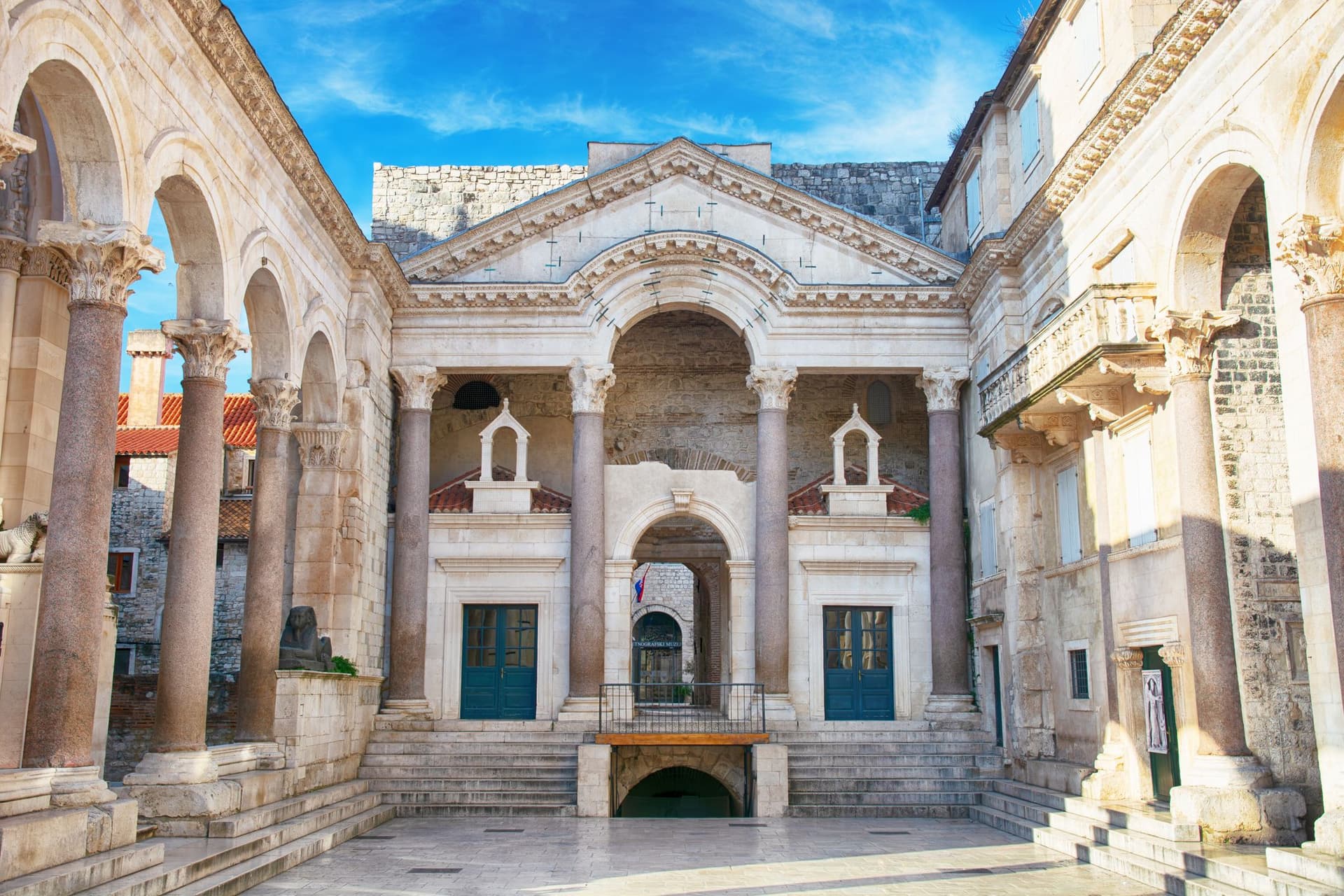
Goosebumps are guaranteed at Diocletian’s Palace. Source: iStock
Why visit one UNESCO site in a day when you could see two? In Croatia, your ferry can both depart from and land at something magic. Split’s Historical Complex with the Palace of Diocletian was inscribed in 1979; the Stari Grad Plain on the island of Hvar followed in 2008.
The ancient sites of Split and Hvar, Croatia
Diocletian’s Palace was built in 300 AD as a Roman emperor’s seaside retirement estate. Today, the towering marble structure is home to cafes, wine bars, apartments, and even a cathedral. It’s an unbelievable structure best seen at dawn when the sun casts the white marble aglow. From there, you can walk two minutes to the ferry port and hop aboard the catamaran to Hvar. There the history turns greener and older still: the Stari Grad Plain is a grid of fields the ancient Greeks of Pharos laid out in the 4th century BC, still farmed within the same dry-stone walls 2,400 years on. It’s arguably the best-preserved ancient Greek landscape in the Mediterranean.
Split is the busy hub of the Dalmatian coast, reached year-round from the Croatian mainland and, across the Adriatic, from Italy. From its harbour—a two-minute walk from the palace gates—fast catamarans buzz out to Hvar and the other islands all year, most frequently in summer.
Popular ferry routes to Split & Hvar
⛴️ Ancona → Split — ~11h30 (overnight, Italy–Croatia)
🔁 Split → Hvar Town — 55 min–1h20 (the two-UNESCO hop)
🔁 Split → Dubrovnik — ~4h30–5h
Ibiza, Spain
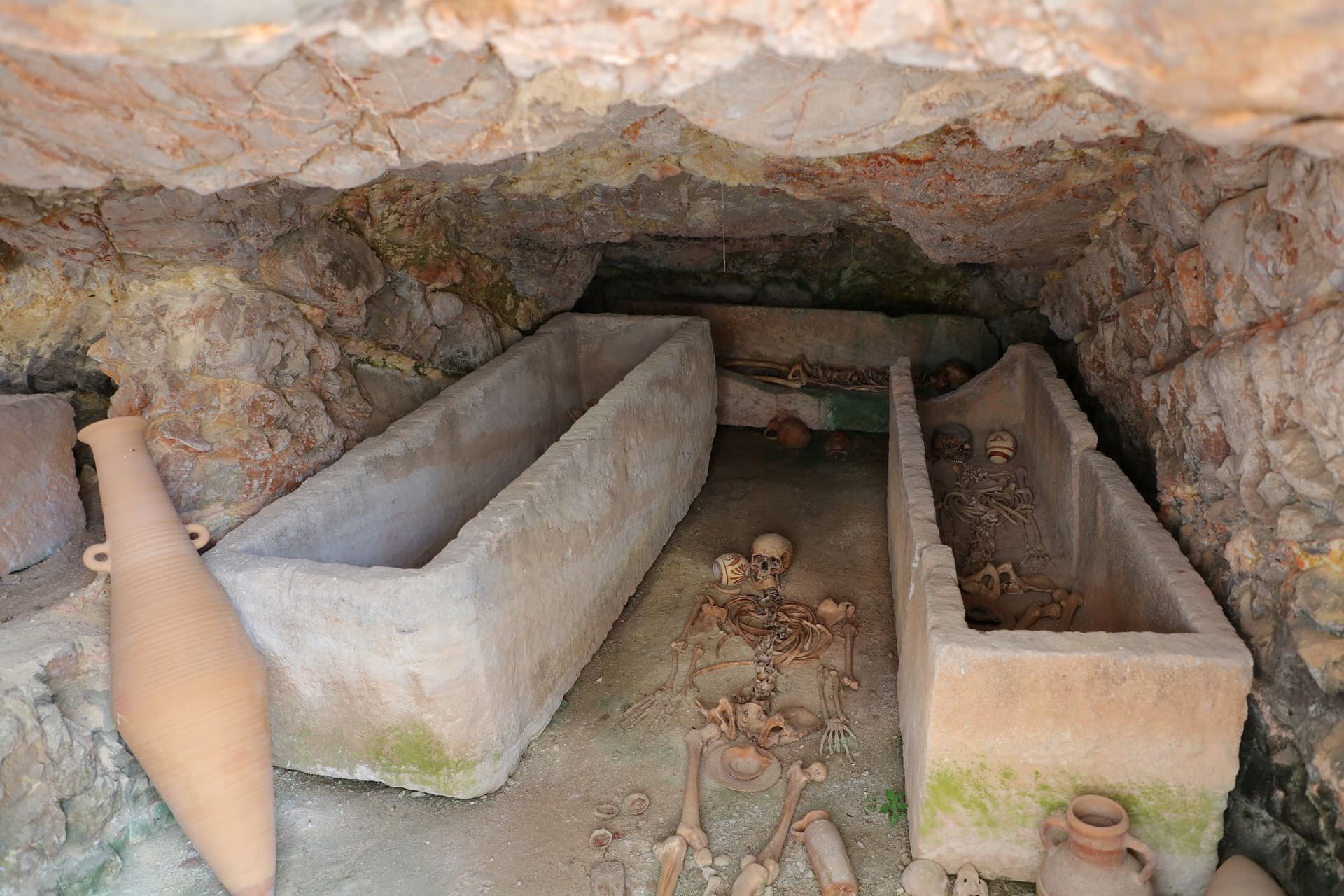
Be wary of partying a little too hard in Ibiza. Source: iStock
Ibiza? The land of tight pants, sparkling white veneers, and clubbing until sunrise? Believe it or not, that’s only one chapter of the Spanish island’s story. UNESCO inscribed Ibiza, Biodiversity and Culture in 1999 through an unusual joint listing that honours both the island’s marine ecosystem and its layered human past. The designation gathers up the fortified Renaissance old town of Dalt Vila, the Phoenician settlement of Sa Caleta, the Puig des Molins necropolis, and the vast Posidonia seagrass meadows in the surrounding sea.
The UNESCO sites of Ibiza
Ibiza guards nearly three millennia of history. Phoenician traders founded Sa Caleta in the 8th century BC, and their dead rest at Puig des Molins — one of the best-preserved Phoenician-Punic necropolises anywhere, its hillside honeycombed with thousands of tombs. Crowning the capital, Dalt Vila (“upper town”) climbs behind mighty 16th-century Renaissance walls through a maze of whitewashed lanes to a Gothic cathedral and castle, the whole Mediterranean glittering below. And beneath the waves, endless meadows of Posidonia—some patches thousands of years old—keep those famous waters crystalline.
Ibiza is reachable year-round, with the widest choice of crossings spring through autumn. Fast ferries from the Spanish mainland get you there in a couple of hours; the overnight boat from Barcelona lets you sleep your way across and wake up in Dalt Vila.
Popular ferry routes to Ibiza
⛴️ Barcelona → Ibiza — ~8h30 (overnight)
⛴️ Dénia → Ibiza — ~2h15 (fastest from the mainland)
⛴️ Valencia → Ibiza — ~5–7h
⛴️ Palma de Mallorca → Ibiza — ~2–4h
🔁 Formentera → Ibiza — ~30 min
Giant’s Causeway, Northern Ireland
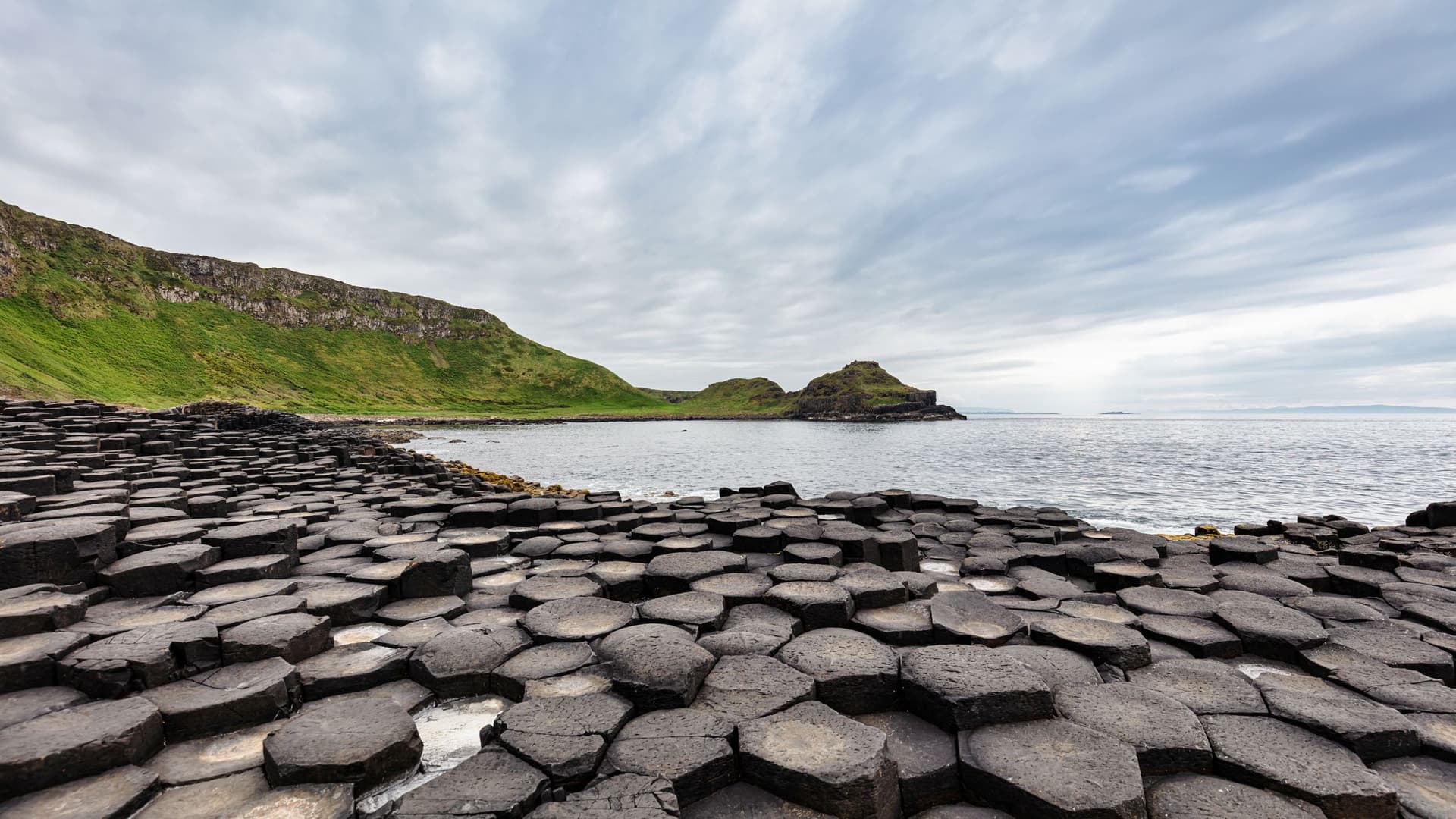
Like something out of a dark fairytale. Source: iStock
The Giant’s Causeway and Causeway Coast became Northern Ireland’s first UNESCO World Heritage Site in 1986. It was inscribed not for human handiwork, but for one of the most spectacular volcanic rock formations on Earth.
More about this haunting natural wonder
Some 40,000 interlocking basalt columns, most near-perfect hexagons, step down into the Atlantic like a giant’s staircase. These unique stones formed 50–60 million years ago as molten lava cooled and fractured. That said, local legend prefers the tale of Finn McCool, the giant said to have laid the causeway to reach a rival across the sea in Scotland. There’s human history close by, too: the dramatic clifftop ruins of medieval Dunluce Castle, and the Old Bushmills Distillery, licensed back in 1608. The Causeway itself sits about an hour up the coast from Belfast, along the glorious Causeway Coastal Route.
Unlike the Mediterranean stops, this is a year-round crossing. You sail to Belfast, then drive (or cycle) up to the stones. The hop from Scotland is one of the quickest sea crossings between Great Britain and the island of Ireland.
Popular ferry routes to the Giant’s Causeway
⛴️ Cairnryan → Belfast — ~2h15
⛴️ Liverpool (Birkenhead) → Belfast — ~8h (overnight)
🚗 Belfast → Giant’s Causeway — ~1 hr by road (Causeway Coastal Route)
Dubrovnik, Croatia
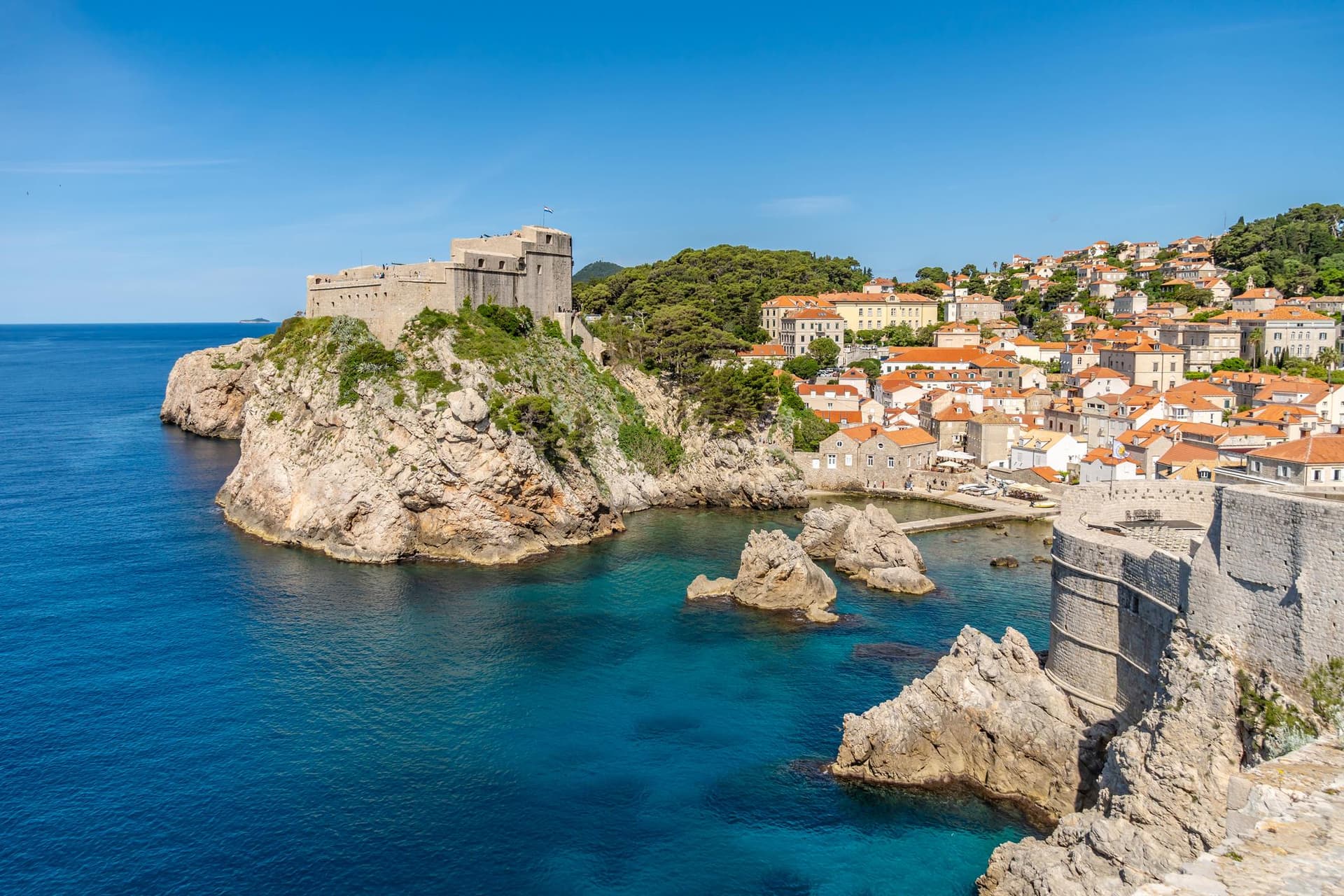
Built to defend against dragons. Source: iStock
The Old City of Dubrovnik joined the UNESCO list in 1979 (extended in 1994 after post-war restoration), its ring of medieval walls enclosing one of the best-preserved historic centres in the Mediterranean.
What to see in Dubrovnik
Dubrovnik wears its history on its walls. Nearly 2 km of medieval fortifications, in places 25 m high, circle the old town, and walking their full loop is the definitive Dubrovnik experience: terracotta rooftops on one side, open Adriatic on the other. Inside, the marble-paved Stradun runs like a polished spine between the Gothic and the baroque; the Rector’s Palace, the Sponza Palace, Onofrio’s Fountain, and a Franciscan monastery whose pharmacy has been dispensing since 1317, among the oldest still working in Europe. Little wonder the whole ensemble makes such a convincing King’s Landing.
Dubrovnik’s ferries run mainly spring to autumn. The long crossing from Italy is a seasonal overnight adventure, while fast catamarans link the city up the coast to Split and out to the nearby islands through the warmer months.
Popular ferry routes to Dubrovnik
(Times approximate; all routes seasonal, roughly April–October)
⛴️ Bari → Dubrovnik — ~8–10h (overnight)
🔁 Split → Dubrovnik — ~4h30–5h (catamaran)
🔁 Korčula → Dubrovnik — ~2h (catamaran)
Delos, Greece
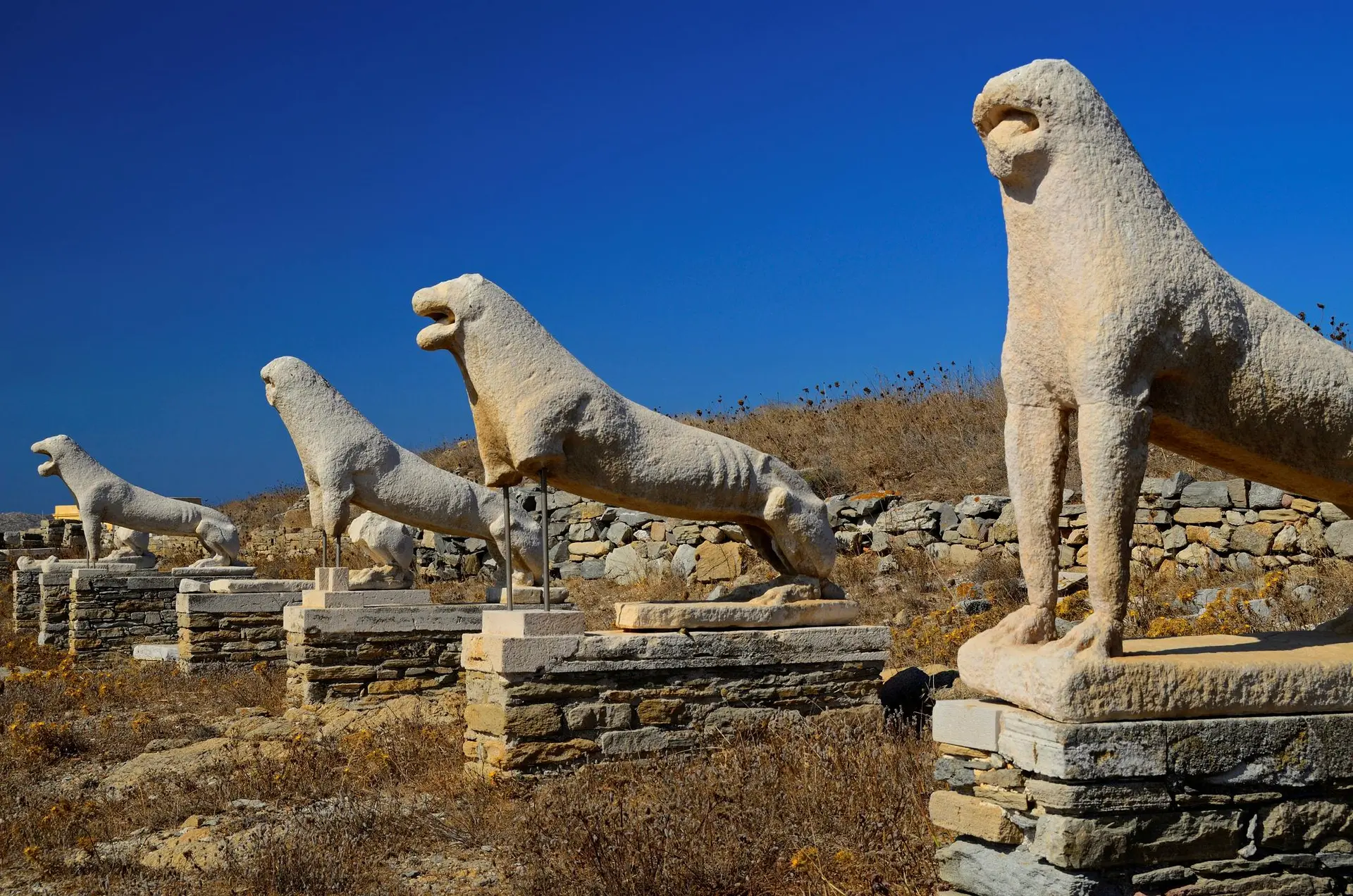
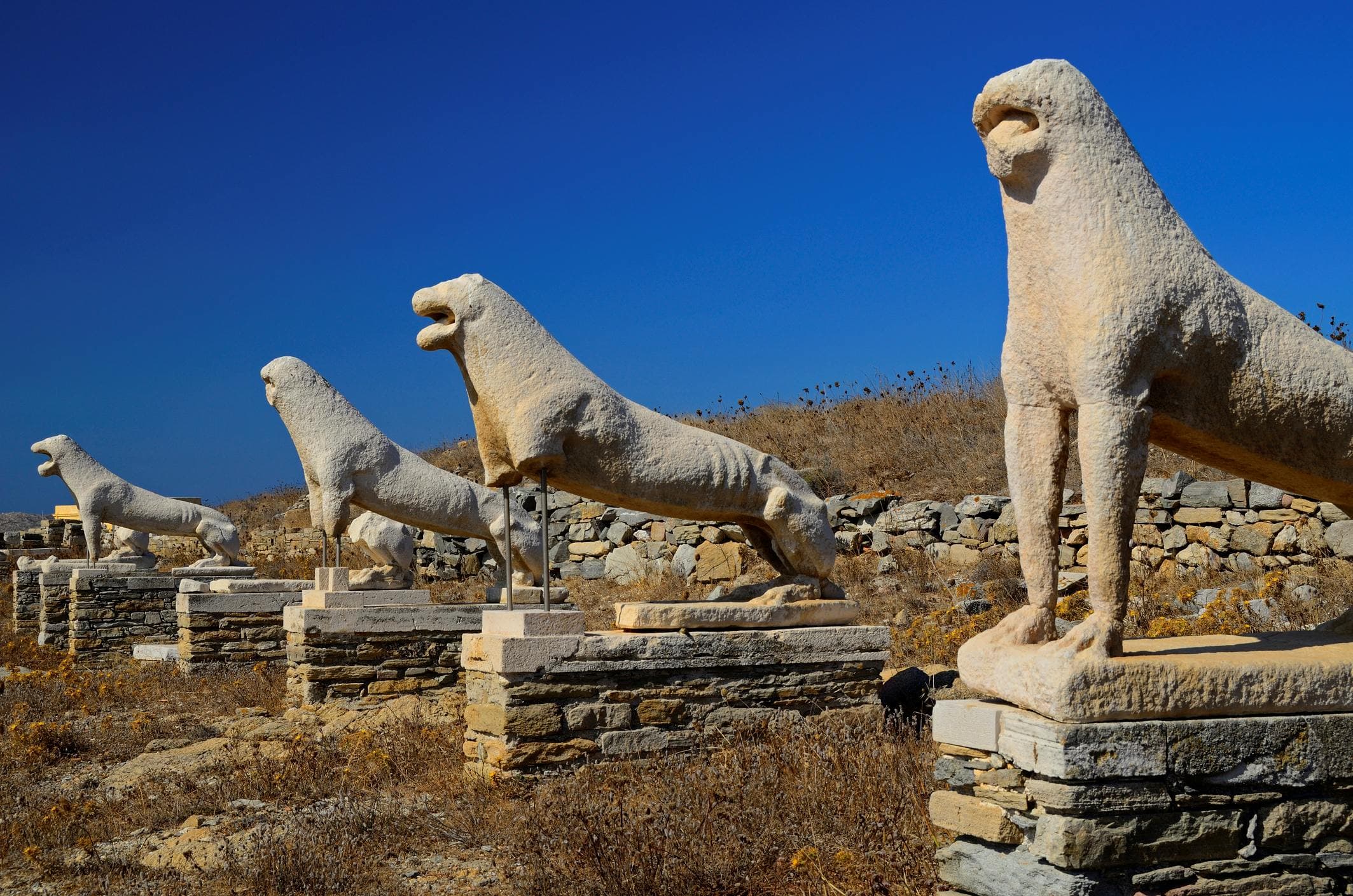
The lions are faced East, towards the Sacred Lake of Delos where Greek scholars of the time believed Apollo had been born.
The entire island of Delos is a UNESCO World Heritage Site, inscribed in 1990. It’s an uninhabited, open-air archaeological site of extraordinary richness, and in myth the sacred birthplace of Apollo and Artemis.
A day in Delos
Few places pack so much of the ancient world onto so small an island. First settled around 3000 BC, Delos grew into one of the Aegean’s most important religious sanctuaries and trading ports— so sacred that ancient law forbade anyone to be born or to die on its soil. Today you can wander the Sanctuary of Apollo, pose beneath the iconic marble Terrace of the Lions, trace the mosaic floors of the House of Dionysus and the House of Cleopatra, climb Mount Kynthos for the panorama, and finish among the statues in the island museum. (Bring water and a hat; there’s almost no shade!)
Delos is a day trip only option reached by small excursion boat from Mykonos Old Port, roughly April to November and weather permitting (the site closes on Mondays). Because it’s a local excursion rather than a scheduled ferry, you’ll get there via Mykonos, which is superbly connected to the mainland and the rest of the Cyclades.
Popular ferry routes to Mykonos (gateway for Delos)
⛴️ Piraeus (Athens) → Mykonos — ~2h45–5h
⛴️ Rafina → Mykonos — ~2h15–4h
🔁 Naxos → Mykonos — ~35 min–1h
🔁 Mykonos → Delos — ~30 min local excursion boat from the Old Port (bought at the quay, not a bookable ferry route)
Ready to sail back to the past?
From the basalt steps of the Giant’s Causeway to the sacred ruins of Delos, these seven UNESCO World Heritage Sites prove that some of the world’s greatest places are still best reached the old-fashioned way: by sea.
Every crossing in this guide can be compared and booked in a few taps on the Ferryscanner website or app. And if you set up a free account before you go, you’ll begin collecting Ferryscanner Miles, our loyalty points, on every trip!
The ancient sea road is waiting. Where will it take you first?
More Articles
View all Inspiration articles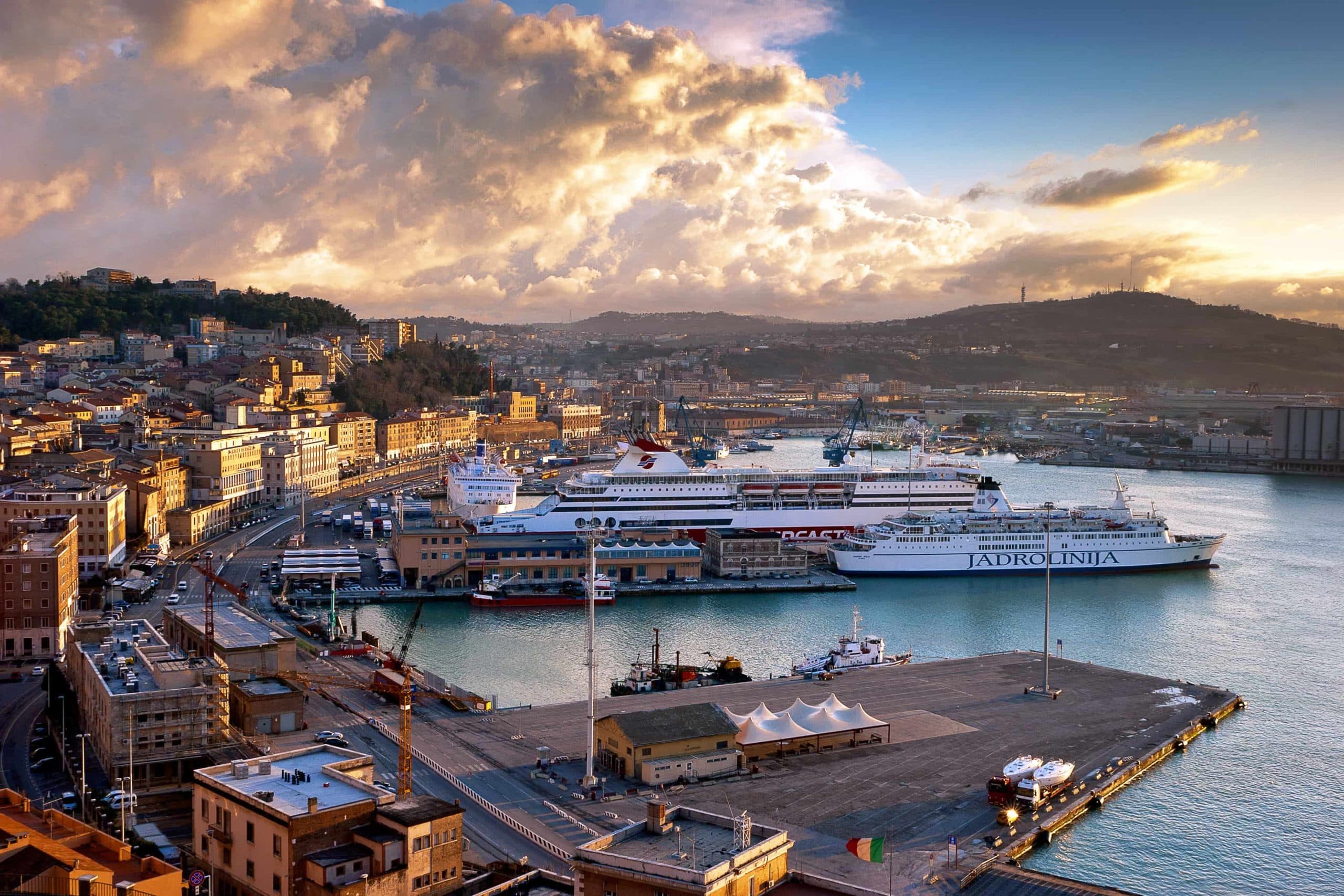
Ferries from Croatia to Italy: Routes, Prices & Travel Tips
26 February 2025
Sail from Croatia to Italy with ease! Discover ferry routes from Split, Pula, Rovinj, and Dubrovnik to Italy’s top destinations like Venice and Ancona. Compare schedules, prices, and travel tips to plan your Adriatic crossing.
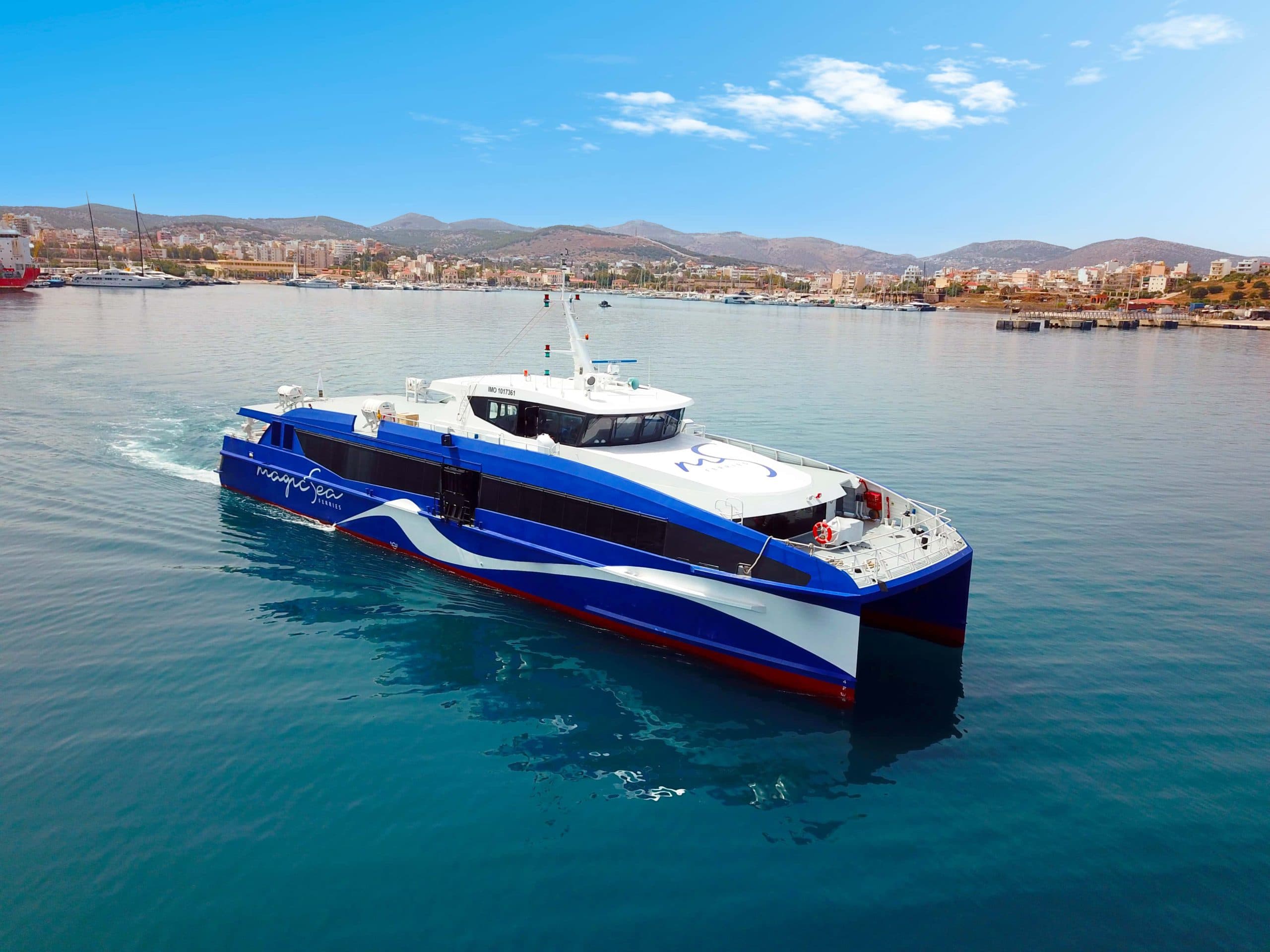
Up to 50% off ferries to the Saronic Gulf and Cyclades with Magic Star Ferries new fleet
11 August 2026
Magic Sea Ferries has renewed its fleet with modern high-speed ferries, Starlink Wi-Fi and a complete travel experience from boarding to disembarkation. See offers up to 50% for the Saronic Gulf and the Cyclades.