Ferry to Spain from the UK: routes, crossing times and tips
17 February 2026 • Brooke MackenzieIf you want to take your car to Spain without driving the length of France, the ferry is the way to do it. Three direct routes cross the Bay of Biscay from the south coast of England to northern Spain, and you’ll spend one or two nights on board, depending on which one you pick.
The short answer:
- There are three direct routes: Portsmouth to Santander, Portsmouth to Bilbao and Plymouth to Santander. Brittany Ferries runs all three.
- The crossing takes about 20 to 36 hours. Plymouth to Santander is the shortest, at around 20 hours with one night on board. Both Portsmouth routes take around 31 to 36 hours with two nights on board.
- Portsmouth sails all year. Plymouth is seasonal, running from roughly late March to early November.
- Each route has about two sailings a week, so you’ll need to plan your dates around the timetable.
You can compare times and prices for every route right here on Ferryscanner! You’ll pay the same price as booking direct, earn Ferryscanner Miles to put toward future trips, and get help from our first-class customer service team if need be.

Hop off the ferry from UK to Spain and visit Guggenheim Museum in Bilbao. Source: iStock
Which ferries go from the UK to Spain?
Three direct ferry routes link the UK and Spain, all operated by Brittany Ferries. In peak season, there are up to six departures a week from the UK, two on each route.
Portsmouth to Santander
- Crossing time: about 31 to 33 hours, with two nights on board
- Season: all year, with fewer sailings in winter
- Best for: travelers from London, the Southeast and the Midlands, and anyone heading to western Spain or Portugal
- Book: Portsmouth to Santander ferry
Portsmouth to Bilbao
- Crossing time: about 32 to 36 hours, with two nights on board
- Season: all year, with fewer sailings in winter
- Best for: the Basque Country, the Pyrenees, La Rioja and the drive to Barcelona or the Mediterranean coast
- Book: Portsmouth to Bilbao ferry
Plymouth to Santander
- Crossing time: about 20 hours, with one night on board
- Season: roughly late March to early November
- Best for: travelers from the Southwest and South Wales, and anyone who wants the least time at sea
- Book: Plymouth to Santander ferry

Admire Palacio de la Magdalena in Santander, once the royal summer residence of the Spanish monarchy. Source: iStock
How long is the ferry from the UK to Spain?
The ferry from the UK to Spain takes between about 20 and 36 hours. Plymouth to Santander is the quickest crossing at around 20 hours. Portsmouth to Santander takes about 31 to 33 hours, and Portsmouth to Bilbao takes about 32 to 36 hours.
The Portsmouth sailings usually leave in the evening and arrive in Spain in the morning two days later, so you get a full day at sea in between. Plymouth sailings usually leave in the afternoon and arrive in Santander around midday the next day.
Crossing times vary from sailing to sailing, and the trip home is often a few hours shorter than the trip out. Check the exact times for your date when you compare tickets.
Should you sail from Portsmouth or Plymouth?
Sail from Portsmouth if you live in London, the Southeast or the Midlands, or if you’re traveling between November and March. Sail from Plymouth if you live in the Southwest or South Wales, or if you want to spend as little time at sea as possible.
Portsmouth is the easier port for most of England, and it’s the only option in winter. The trade-off is a longer crossing, with two nights on board heading south.
Plymouth saves you about 11 hours at sea, but it’s a long drive from the east of the country. If you live in London or the Southeast, the extra time on the road can cancel out the shorter crossing, and some travelers book a hotel near the port the night before. Plymouth sailings also stop over the winter months, so check that your dates fall inside the season.
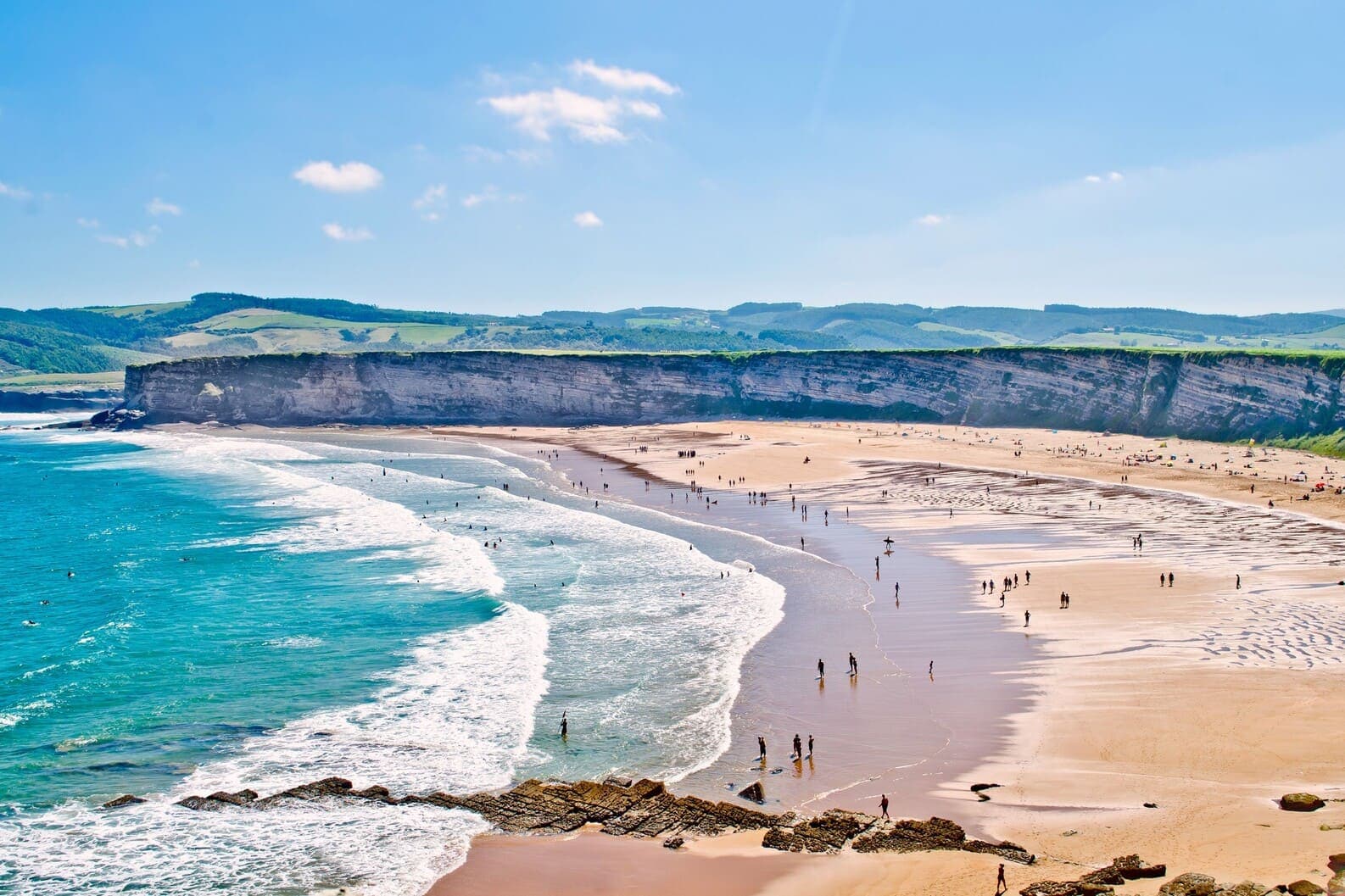
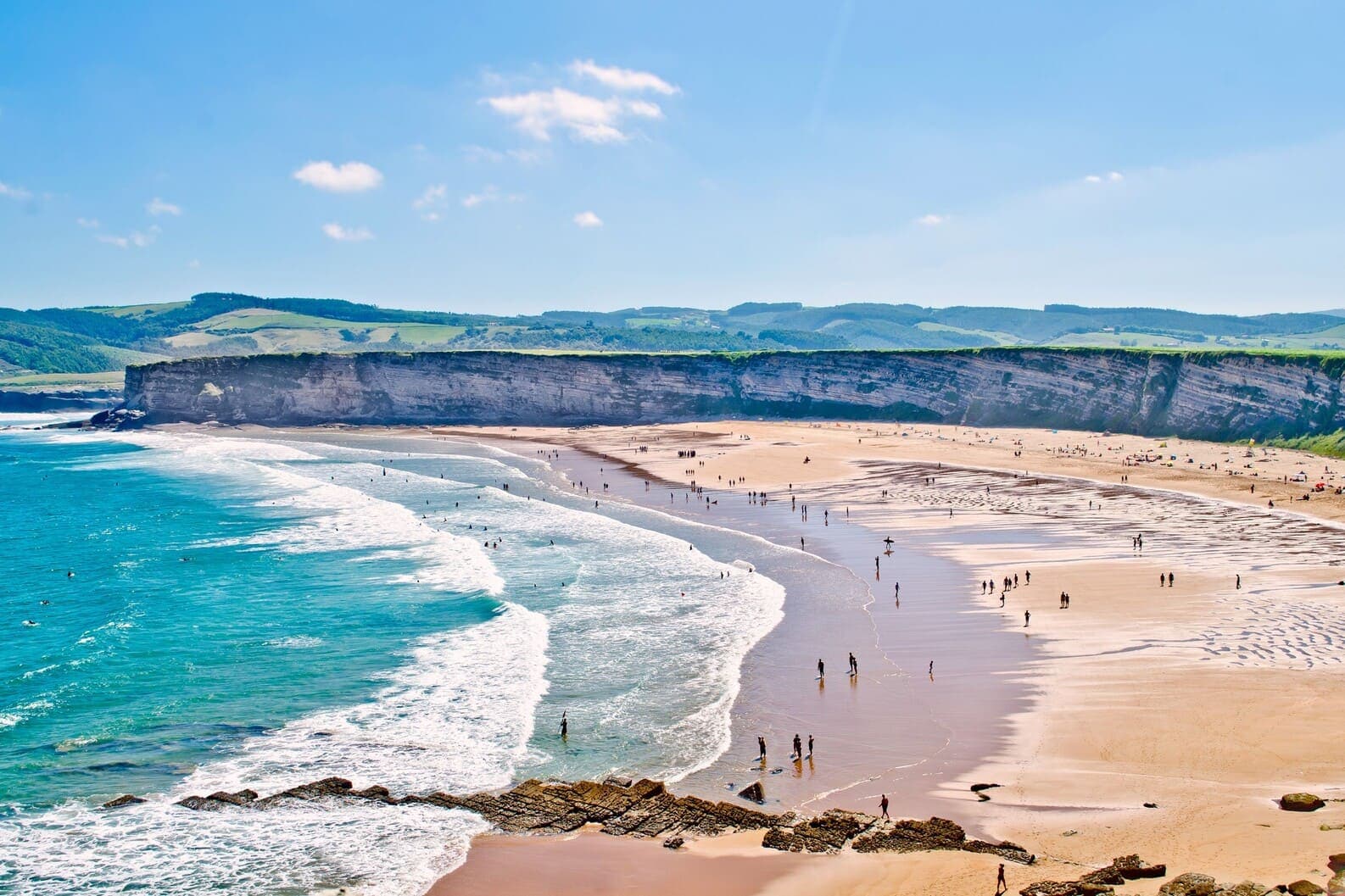
Only 30 minutes away by car from Santander you can find beautiful Playa de Langre. Source: iStock
Should you arrive in Santander or Bilbao?
Choose Santander if you’re heading to Cantabria, Asturias, Galicia, Madrid or Portugal. Choose Bilbao if you’re heading to the Basque Country, the Pyrenees, La Rioja, Barcelona or the Mediterranean coast.
The two ports are only about 100 kilometers apart, so it matters less than you might think. A few practical differences:
- Santander’s ferry terminal is right in the city center. You can walk off a foot passenger ticket and be in town in minutes, or drive straight onto the main roads south.
- Bilbao’s ferry port is in Santurtzi, about 30 minutes from central Bilbao. It’s handy for the motorway east toward France and Barcelona.
- For the south of Spain, both work. Madrid is about four to five hours’ drive from either port, and Andalucia is a long day’s drive beyond that, so many people break the trip with a night on the way.
Is there a shorter ferry to Spain from the UK?
There’s no shorter direct ferry, but you can take a short crossing to France and drive the rest of the way. It’s a popular choice if you want more sailing times to pick from or a lower fare, and you don’t mind a long drive.
The most practical crossings for Spain leave from the south coast to Normandy and Brittany:
- Portsmouth to Caen: several sailings a day, all year
- Portsmouth to Saint-Malo: overnight sailings, so you arrive ready to drive
- Plymouth to Roscoff: handy from the Southwest
- Dover to Dunkirk: the shortest sea crossing, but the longest drive to Spain
From the Normandy and Brittany ports, the Spanish border at Irún is roughly 750 to 900 kilometers away. That’s about 8 to 10 hours of driving, plus French motorway tolls, fuel and probably a hotel night.
So which is better? The direct ferry costs more but saves you two days of driving and puts you in Spain rested. The France route usually costs less on the ferry itself and gives you more flexibility, but the drive, tolls and overnight stops add up.
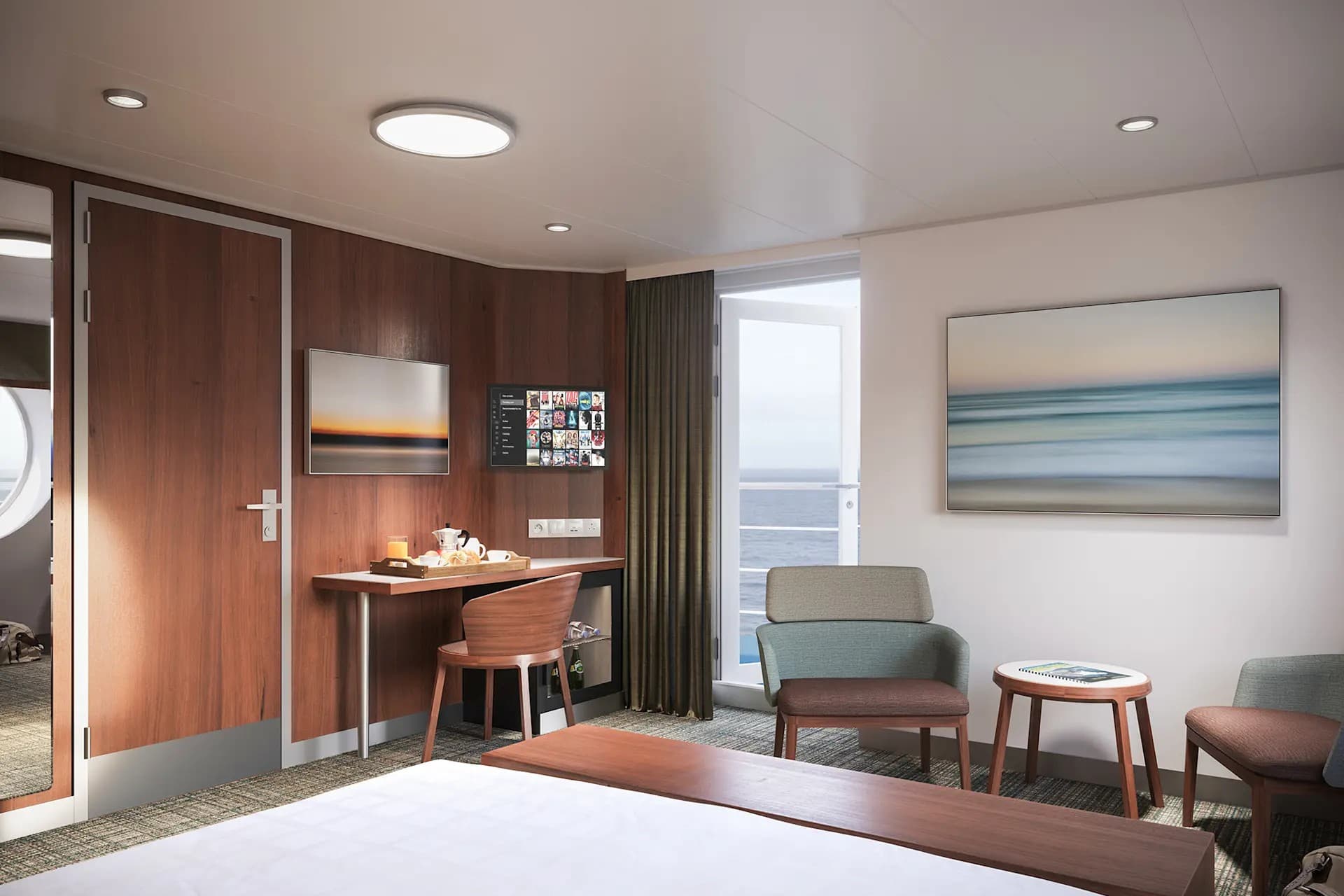
Relax in a private 2-bed suite on Galicia ferry. Source: Brittany Ferries
What’s it like on board the ferry to Spain?
The ferries to Spain are large cruise-ferries, built for long crossings. You’ll find restaurants, cafes, bars, shops and lounges on board, and some ships have a cinema or entertainment in the evening.
Book a cabin when you book your ticket. You’ll spend at least one night at sea, and cabins sell out first in summer. Cabin types range from simple inside cabins to larger cabins with a sea view.
The Bay of Biscay has a reputation for rough water, especially in autumn and winter. If you get seasick, pick a cabin on a lower deck near the middle of the ship, and pack whatever usually helps you.
When should you book the ferry to Spain?
Book as early as you can for July and August, and for any trip that needs a pet-friendly cabin. With only about two sailings a week on each route, popular dates fill up fast.
Brittany Ferries usually puts the next year’s Spain schedule on sale well in advance. Sailings from November 2026 to November 2027 are already available, so you can plan next year’s trip now.
For quieter ships and lower fares, look at spring and autumn. If you’re traveling in winter, remember that only the Portsmouth routes run, and leave some flexibility in your plans in case bad weather in the Bay of Biscay disrupts a sailing.
What documents do you need to take the ferry to Spain?
You need a valid passport to take the ferry from the UK to Spain. If you’re traveling on a UK passport, check that it was issued less than 10 years before the day you arrive and is valid for at least three months after the day you plan to leave.
UK passport holders can spend up to 90 days in any 180-day period in Spain and the rest of the Schengen area without a visa. The EU’s Entry/Exit System (EES) now registers non-EU travelers with fingerprints and a photo instead of a passport stamp. On the Spain ferries, you’ll go through this check when you arrive in Spain, so allow a little extra time at the port.
The EU also plans to introduce ETIAS, an online travel authorization for UK visitors, but it hasn’t started yet. Check GOV.UK’s travel advice for Spain before you go.
Can you take your car or pet on the ferry to Spain?
Yes, you can take a car, van, motorhome, motorcycle or bicycle on all three routes, and you can also travel as a foot passenger. Most people take their car, since it’s the main reason to sail instead of fly.
Pets can travel too. The Spain ferries have pet-friendly cabins, which book up quickly, and onboard kennels. Pet travel rules between the UK and the EU can change, so check the current requirements on GOV.UK before you go.
If you’re driving in Spain, bring your driving license, your vehicle’s logbook (V5C) and insurance documents, and display a UK sticker on your car. GOV.UK’s guide to driving abroad lists the full requirements.

Source: Brittany Ferries / Patrick Browne
Can you take a ferry to Spain from Ireland?
Yes. Brittany Ferries runs direct sailings from Rosslare to Bilbao, and there have also been sailings from Cork and Rosslare to Santander. If you live in Northern Ireland or the west of the UK, these can be worth comparing. Our guide to ferries from Ireland to Spain covers the routes in detail.
How do you get back from Spain to the UK?
The same three routes run in the opposite direction, from Santander and Bilbao to Portsmouth and Plymouth. The northbound crossing is often a few hours shorter. See our guide to ferries from Spain to the UK for the return routes, and book both legs on Ferryscanner when you’re ready.
FAQs
Is there a ferry from the UK to Spain?
Yes. Brittany Ferries runs three direct routes from the UK to Spain: Portsmouth to Santander, Portsmouth to Bilbao and Plymouth to Santander. The Portsmouth routes sail all year, and Plymouth to Santander runs from roughly late March to early November.
How long is the ferry from the UK to Spain?
The ferry from the UK to Spain takes about 20 to 36 hours. Plymouth to Santander is the shortest at around 20 hours with one night on board. Portsmouth to Santander takes about 31 to 33 hours and Portsmouth to Bilbao about 32 to 36 hours, both with two nights on board.
What is the quickest ferry to Spain from the UK?
Plymouth to Santander is the quickest ferry to Spain from the UK, at around 20 hours. It runs from roughly late March to early November, so in winter the quickest direct option is Portsmouth to Santander.
How often do ferries sail from the UK to Spain?
Each of the three UK–Spain routes has about two sailings a week in each direction in peak season, with fewer sailings on the Portsmouth routes in winter. That means up to six departures a week from the UK to Spain.
Can you take a car on the ferry from the UK to Spain?
Yes. All three routes take cars, vans, motorhomes, motorcycles and bicycles, and you can also travel as a foot passenger. Bring your driving license, logbook (V5C) and insurance documents, and display a UK sticker on your car.
Is it cheaper to take the ferry to France and drive to Spain?
The ferry fare to France is usually cheaper, and there are many more sailings. But once you add 8 to 10 hours of driving, French tolls, fuel and a hotel night, the savings shrink. The direct ferry costs more but saves you about two days on the road.
Do you need a passport to take the ferry to Spain?
Yes. You need a valid passport, and UK passport holders can stay up to 90 days in any 180-day period without a visa. You’ll register with the EU’s Entry/Exit System when you arrive in Spain.
More Articles
View all Guidance articles
Ferries from Croatia to Italy: Routes, Prices & Travel Tips
26 February 2025
Sail from Croatia to Italy with ease! Discover ferry routes from Split, Pula, Rovinj, and Dubrovnik to Italy’s top destinations like Venice and Ancona. Compare schedules, prices, and travel tips to plan your Adriatic crossing.

Island hopping in the Philippines: a dry season guide
27 October 2026
The Philippines' dry season runs from about December to May. Here's when to go, which island routes work best, and how to plan the ferries between them.